Do’s and Don’ts in India
Cultural Etiquette & Travel Behavior Guide
India is incredibly diverse, and customs can change noticeably from one region to another. What feels normal in Mumbai may feel very different in smaller towns, villages, or religious places. Travelers who approach India with patience, curiosity, and respect usually have far smoother and more rewarding experiences. Whether you are visiting royal forts in Rajasthan, spiritual cities like Varanasi, or modern urban centers, understanding a few local etiquette basics makes a real difference.
Cultural Do’s in India
Respect Local Customs
India’s traditions are deeply connected to religion, family values, and local culture. Visitors who show respect toward these customs are generally welcomed warmly almost everywhere.
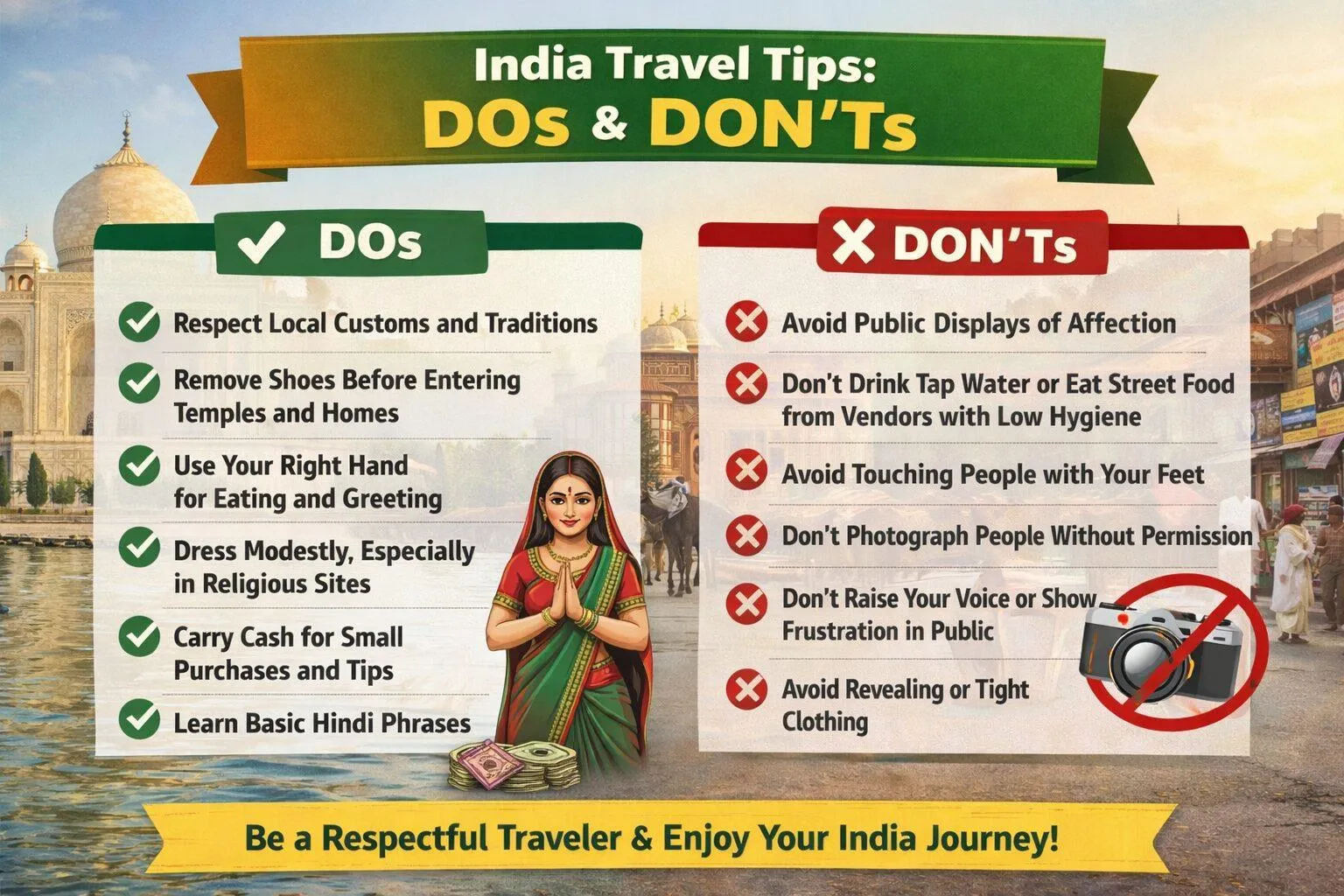
- Dress modestly in villages, temples, and traditional areas
- Remove shoes before entering temples and many family homes
- Use your right hand while giving, receiving, or eating
- Stay calm and patient in crowded places or busy markets
Temple Etiquette
Temples are active places of worship, not just tourist attractions. A respectful approach is always appreciated, especially in important pilgrimage cities and traditional temple towns.
- Wear clothing that covers shoulders and knees
- Remove footwear before entering temple areas
- Speak softly and avoid disruptive behavior
- Follow local queues and entry systems
- Respect photography restrictions where applicable
In many temples, signs and staff instructions are very clear, so simply observing what locals are doing usually helps.
Greeting Styles & Behavior
The traditional Indian greeting is “Namaste”, usually done by placing the palms together with a slight nod. It is respectful, warm, and widely understood across the country.
- A gentle handshake is common in modern cities and business settings
- Address elders respectfully using Mr., Mrs., or by adding “ji” after a name
- Polite body language and patience are always appreciated
- Accept hospitality graciously, even if it is only tea or snacks
Public displays of affection are generally limited in traditional and religious areas.
Common Don’ts in India
Avoid Offensive Gestures
- Avoid pointing your feet toward people, books, or religious objects
- Touching someone’s head, especially a child’s, may feel disrespectful in some communities
- Use your right hand when offering food, money, or important items
- Public arguments or loud confrontations are generally viewed negatively
Calm and respectful behavior is valued throughout India, especially in traditional environments.
Photography Rules
India offers incredible photography opportunities, but cultural sensitivity is important while taking pictures.
- Photography is restricted in military zones, certain government buildings, and some airports
- Always ask permission before photographing local people, especially in villages
- Many temples and religious sites prohibit photography inside sanctum areas
- Be respectful around ceremonies, cremation ghats, and spiritual rituals
If you are unsure whether photography is allowed, it is always best to ask first.
Food & Hygiene Mistakes to Avoid
- Avoid drinking tap water during your trip
- Be cautious with raw salads or cut fruits from unknown vendors
- Choose street food stalls that appear busy, clean, and freshly prepared
- If you are not used to spicy food, start gradually rather than overeating rich dishes immediately
- Prefer sealed bottled water from reliable brands
- Freshly cooked hot meals are usually the safest option
- Carry hand sanitizer and wash hands regularly while traveling
Reputable hotels, restaurants, and well-rated cafes across major Indian cities generally maintain very good hygiene standards.
Final Cultural Tip
India is incredibly welcoming to respectful travelers. A little patience, cultural sensitivity, modest dressing, and genuine curiosity often lead to warm local interactions and some of the most memorable travel experiences.
Frequently Asked Questions (FAQ)
1) What should I avoid doing in India as a tourist?
Avoid disrespecting religious customs, taking photographs without permission, drinking tap water, and behaving aggressively in public. A respectful and patient attitude is always appreciated across India.
2) Is there a dress code for temples in India?
Yes. Most temples expect visitors to dress modestly with shoulders and knees covered. Footwear must usually be removed before entering religious sites and temple complexes.
3) How should I greet people in India?
“Namaste” with folded hands is a traditional and respectful greeting. In larger cities and business settings, a polite handshake is also common.
4) Is it okay to take photos everywhere in India?
No. Photography may be restricted inside temples, military zones, airports, and certain monuments. It is always courteous to ask permission before photographing local people.
5) What food precautions should I take in India?
Drink sealed bottled water, choose freshly cooked meals, and be careful with raw food from unknown vendors. Good hotels and reputable restaurants in major cities generally maintain excellent hygiene standards.
6) Are public displays of affection acceptable in India?
Public displays of affection are generally limited, especially in traditional, rural, and religious areas. Modest public behavior is considered more culturally appropriate.