
Is There Really a “Best Time to Travel”?
What Smart Travelers Understand About Seasons
When planning a holiday, one question always comes first: “What is the best time to travel?” Many travel guides give calendar-based answers, but experienced travelers know something deeper — there is no universal best time to travel, only the best time for the kind of experience you want. Understanding this changes how journeys are planned and experienced.
Why the Idea of a “Best Season” Is Misleading
- Seasons are often labeled as peak, shoulder, and off season.
- But seasons don’t only affect weather — they change the atmosphere of a place.
- Travel costs, tourist numbers, and booking flexibility vary widely.
- The pace of your journey feels different in every season.
- Your connection with local culture can be deeper in quieter months.
- Every season creates a different version of the same destination.
🌸 Peak Season Travel
- Best for: First-time visitors, sightseeing trips, family holidays.
- Pleasant and stable weather.
- Clear views and ideal road conditions.
- All attractions and experiences fully operational.
- Festivals, events, and vibrant tourist life.
- Consider: Higher prices, crowds, and limited booking flexibility.
This season is ideal when your priority is classic sightseeing, photography, and comfort.
🌿 Shoulder Season Travel
- Best for: Travelers seeking balance and value.
- Generally good weather.
- Fewer tourists at attractions.
- Better hotel deals and flexibility.
- Relaxed sightseeing pace.
- Consider: Occasional weather changes and limited seasonal activities.
Shoulder season offers comfort, savings, and a more peaceful experience.
🌧 Off Season Travel
- Best for: Explorers, nature lovers, slow travelers.
- Lowest travel costs.
- Minimal crowds.
- Lush landscapes and seasonal beauty.
- Authentic local interactions.
- Consider: Weather unpredictability and occasional restrictions.
Off season travel is about feeling a destination deeply rather than just seeing its highlights.
✨ What Most Travelers Don’t Realize
Peak season helps you see a destination in its most vibrant form. Off season helps you feel it in a more personal, intimate way. The same place tells completely different stories depending on the season.
So, When Is the Best Time to Travel?
| Your Travel Priority | Best Time to Go |
|---|---|
| Perfect weather & iconic photos | Peak Season |
| Value + comfort + fewer crowds | Shoulder Season |
| Nature, culture & depth | Off Season |
The Real Best Time to Travel
There is no right or wrong time to travel — only different ways to experience the world. The perfect season is the one that matches your travel story, comfort, and purpose.
Region-wise Best Time to Visit India
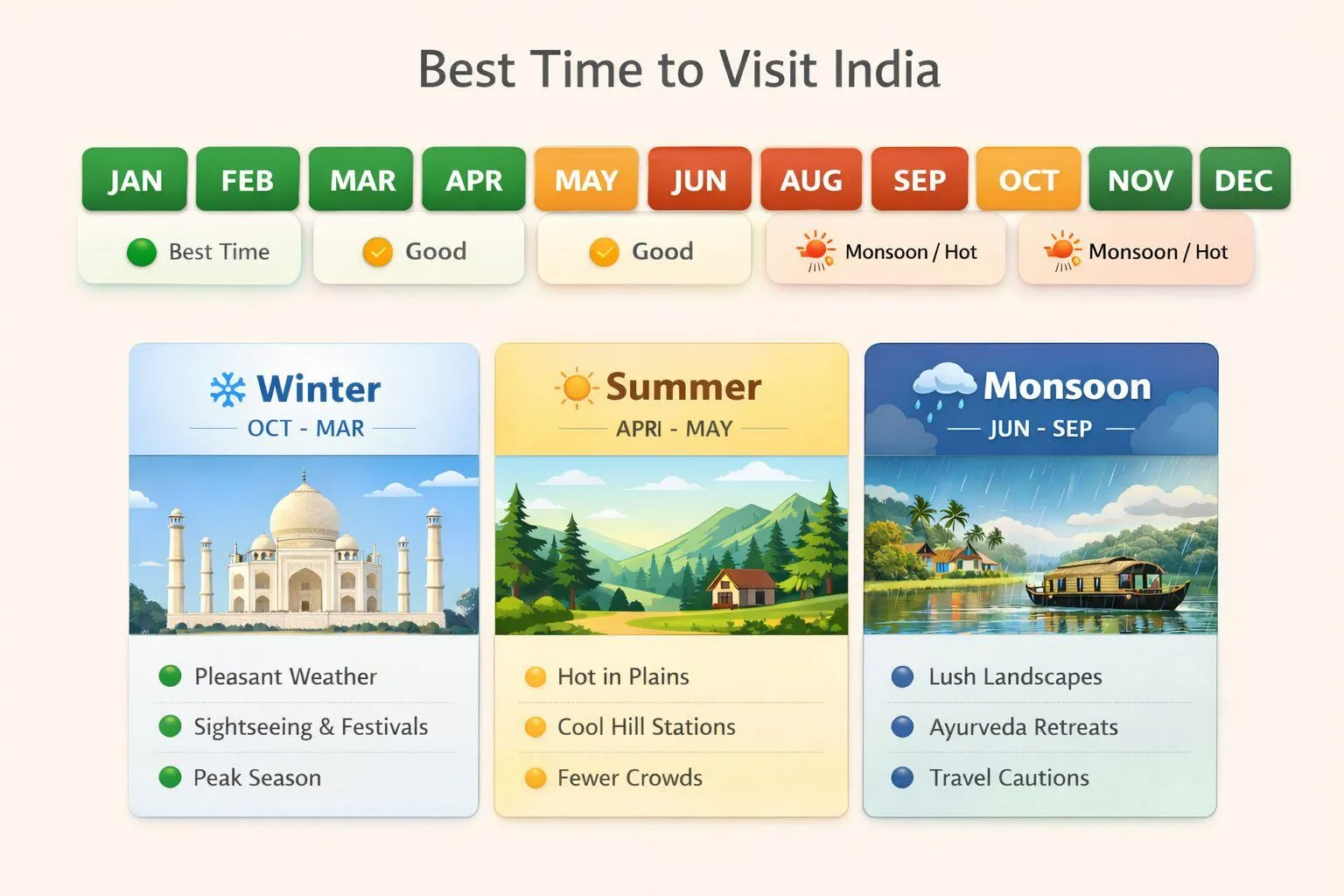
India’s climate varies greatly from region to region, so the ideal travel season depends on where you plan to go. While Rajasthan and the Golden Triangle are most comfortable during winter months, the Himalayas are best explored during summer when mountain roads are open. Understanding seasonal differences helps travelers plan a smoother and more enjoyable India journey.
- Golden Triangle Tours: October to March offers pleasant weather for exploring Delhi, Agra, Jaipur, and nearby cultural destinations comfortably.
- Rajasthan Tours: November to February is ideal for Jaipur, Udaipur, Jodhpur, and Jaisalmer when desert temperatures remain comfortable for sightseeing.
- South India: November to March is best for Kerala, Tamil Nadu, and Karnataka, while monsoon months bring lush landscapes and fewer crowds.
- Himalayan Regions: May to September is recommended for Ladakh, Himachal Pradesh, Kashmir, and Uttarakhand when mountain passes and trekking routes remain accessible.
- Kerala Backwaters & Beaches: November to February provides pleasant temperatures, clear skies, and ideal conditions for houseboats, beaches, and cultural experiences.
Best Time to Visit National Parks in India
India’s wildlife safaris operate seasonally due to weather patterns and conservation rules. Visiting during the right months not only improves wildlife sightings but also ensures better road access and safari conditions. Tiger sightings are generally strongest during warmer months, while winter offers more comfortable weather and excellent birdlife.
- October to February: Comfortable weather and excellent overall safari conditions in Ranthambore, Kanha, Bandhavgarh, Pench, and Jim Corbett National Park.
- March to May: Peak tiger sighting season as wildlife gathers near water sources — especially rewarding in Tadoba, Bandhavgarh, Pench, and Ranthambore.
- June to September: Most core safari zones close during monsoon season, although selected buffer zones may remain operational.
- Himalayan National Parks: May to September is best for parks such as Hemis National Park and Great Himalayan National Park.
- Kaziranga & Northeast India: November to April is recommended after the monsoon flood season recedes.