

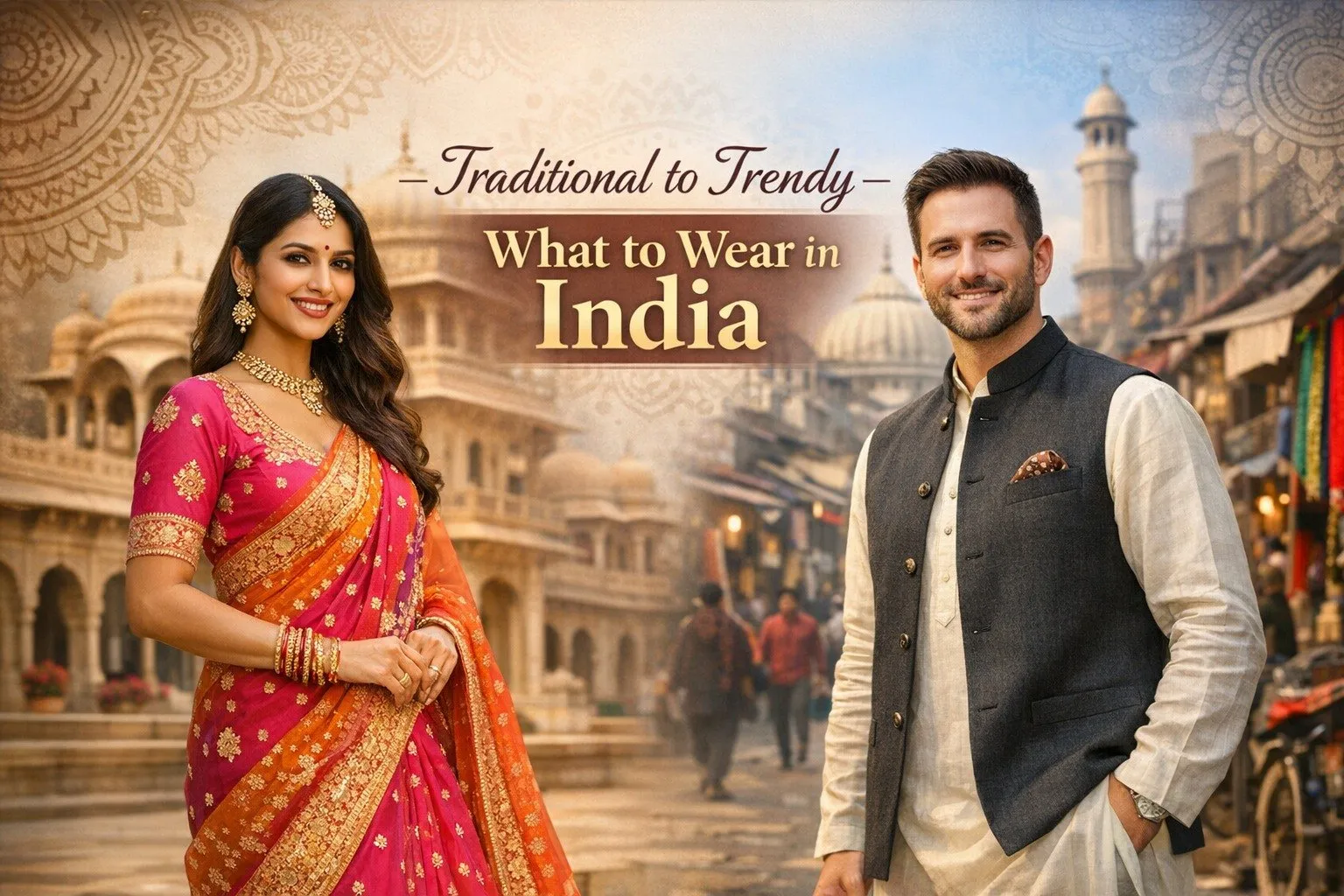
Clothing Guide – What to Wear While Traveling in India
India’s climate, geography, and cultural traditions vary enormously between regions. Travelers may experience tropical humidity in Kerala, cool desert evenings in Rajasthan, mountain temperatures in the Himalayas, and modern urban environments in cities like Delhi or Mumbai — often within the same journey. Dressing appropriately not only improves comfort during travel but also helps visitors feel more culturally comfortable and respectful in traditional areas, temples, and rural communities.
What to Wear While Traveling in India
The best clothing for India is practical, lightweight, breathable, and adaptable to changing temperatures. Loose-fitting outfits, comfortable footwear, and layering options usually work better than heavy or restrictive clothing, especially during long sightseeing days and multi-region itineraries.
-
Clothing for Hot & Humid Regions:
- Lightweight cotton, linen, or breathable fabrics work best in warmer climates
- Loose-fitting shirts, tops, dresses, and trousers remain more comfortable in heat and humidity
- Sandals, breathable sneakers, or ventilated footwear are ideal for coastal regions and tropical destinations
- Wide-brim hats, sunglasses, and light scarves provide useful sun protection
- Avoid heavy synthetic fabrics that trap heat during daytime sightseeing
- Particularly useful for Kerala, Goa, Mumbai, Chennai, and other coastal regions
-
Dressing for Cold Weather & Hill Stations:
- Carry insulated jackets, warm fleeces, or layered winter clothing for colder regions
- Thermal inner layers are especially useful during North India winters and Himalayan travel
- Scarves, gloves, wool sweaters, and warm socks become essential in mountain destinations
- Temperatures can change quickly between sunny afternoons and cold evenings, making layering important
- Useful for Rajasthan winter mornings, Himachal Pradesh, Kashmir, Uttarakhand, and hill stations across India
-
Modest Clothing Guidelines for Temples & Rural Areas:
- Covering shoulders and knees is recommended at temples, spiritual sites, and conservative regions
- Loose and respectful clothing generally attracts less unwanted attention and feels more culturally comfortable
- Women may find scarves or shawls useful for temple visits and traditional areas
- Men should avoid sleeveless shirts at religious sites and pilgrimage destinations
- Particularly relevant in Varanasi, Rishikesh, Pushkar, Amritsar, and smaller rural communities
-
Footwear for Sightseeing & Travel:
- Comfortable walking shoes or cushioned sneakers are essential for long sightseeing days
- Supportive sandals work well in warmer climates and beach destinations
- Closed shoes are recommended for wildlife safaris, trekking, and uneven terrain
- Slip-on footwear is practical because shoes are removed frequently at temples and certain heritage sites
- Good footwear significantly improves comfort during city walks, forts, monuments, and market exploration
Seasonal Clothing Guide
India experiences significant seasonal variation, and clothing choices should match both the weather and the destinations included in your itinerary. Packing according to the season helps travelers stay comfortable during long sightseeing days, road journeys, safaris, and regional climate changes.
-
Summer (March–June):
- Light-colored cotton and linen clothing remains coolest during high temperatures
- Loose-fitting silhouettes improve airflow and comfort during daytime sightseeing
- Wide-brim hats, caps, and sunglasses provide useful sun protection
- High-SPF sunscreen is essential, particularly in Rajasthan and Central India
- Breathable sandals or lightweight walking shoes work best for hot weather
- Avoid heavy dark fabrics that absorb heat and become uncomfortable quickly
-
Monsoon (June–September):
- Quick-dry clothing and lightweight fabrics are practical during rainy conditions
- Carry a compact umbrella or lightweight rain jacket for sudden showers
- Water-resistant sandals or waterproof footwear help during wet conditions
- Avoid very long hemlines or clothing that drags through muddy streets
- Keep an extra change of clothing for longer travel days and humid weather
- Particularly useful for Kerala, Goa, Mumbai, and Northeast India during monsoon months
-
Winter (November–February):
- Warm jackets, sweaters, and layering are essential for North India and Himalayan regions
- Scarves, gloves, and warm socks become useful during cold mornings and evenings
- Desert destinations like Rajasthan can feel warm during the day but chilly at night
- South India generally remains mild, though light layers are still useful during evenings
- Layered clothing allows flexibility between changing daytime and nighttime temperatures
Special Occasions & Cultural Settings
Clothing expectations in India can vary between modern metropolitan cities, conservative towns, spiritual destinations, and traditional family settings. Dressing thoughtfully often creates a more comfortable and respectful travel experience, especially in cultural and religious environments.
-
Visiting Religious Sites:
- Cover shoulders and knees when visiting temples, mosques, monasteries, and gurudwaras
- Footwear is usually removed before entering religious spaces
- Some locations such as the Golden Temple require head coverings
- Certain temples may restrict leather belts, wallets, or bags inside sacred areas
-
Attending Family Visits & Cultural Gatherings:
- Modest and well-presented clothing is generally appreciated
- Avoid overly revealing or excessively casual outfits in traditional homes
- Bright but tasteful clothing often fits well with Indian social occasions
-
Festivals & Indian Weddings:
- Women often wear sarees, salwar kameez, or elegant ethnic outfits for celebrations
- Men commonly wear kurta-pajama, Nehru jackets, or smart semi-formal attire
- Bright colors and festive clothing are widely welcomed during celebrations
- Traditional Indian attire can also become a memorable cultural experience for visitors
-
City vs Rural Dress Considerations:
- Major cities like Delhi, Mumbai, Bangalore, and Goa are generally relaxed regarding Western clothing
- Smaller towns and rural communities tend to be more conservative in dress expectations
- Neutral, comfortable, and modest clothing usually works best across all regions
-
Wildlife Safaris & Trekking Activities:
- Breathable layered clothing is ideal for changing outdoor temperatures
- Closed walking shoes or trekking footwear provide better support and protection
- Neutral colors such as green, beige, brown, or grey help avoid disturbing wildlife
- Carry hats, sunglasses, sunscreen, and lightweight jackets for early morning safaris
Smart Year-Round Packing Checklist
Most travelers do not need excessive luggage for India. A balanced wardrobe with breathable clothing, comfortable footwear, one modest outfit, and flexible layering options usually works well across most regions and seasons.
- 3–5 breathable tops or shirts suitable for sightseeing
- 2–3 comfortable trousers, skirts, or lightweight bottoms
- At least one modest outfit for temples and cultural visits
- One light sweater, jacket, or layering piece for cooler evenings
- Additional warm layers for winter or Himalayan travel
- Lightweight scarf or shawl useful across all seasons
- Comfortable walking shoes for monuments, markets, and city exploration
- Sandals or lighter footwear for warmer destinations
- Compact rain protection if traveling during monsoon season
Final Advice
Travelers in India are usually most comfortable when clothing choices remain practical, breathable, respectful, and adaptable to changing environments. The country’s diversity means there is no single dress code, but comfortable fabrics, modest styling, and sensible layering work well across most destinations and travel situations.
- Simple Rule of Thumb: Choose clothing that is breathable, comfortable, and slightly conservative — especially in traditional or rural regions.
- Respect local customs and cultural expectations, particularly at temples, pilgrimage towns, villages, and family settings.
- Layer clothing thoughtfully to handle changing temperatures between mornings, afternoons, evenings, and different regions.
- Lightweight scarves, shawls, hats, and sunglasses add flexibility for both cultural visits and strong sunlight.
- Comfortable walking footwear often becomes more important than fashion during long sightseeing days and monument visits.
- Packing lighter usually makes travel easier across domestic flights, train journeys, road trips, and multi-city itineraries.
Frequently Asked Questions
1️⃣ What type of clothing is best for traveling in India?
Lightweight and breathable fabrics such as cotton and linen work best across most Indian destinations. Loose-fitting clothing remains more comfortable during sightseeing, especially in warmer climates. For northern India during winter, layered clothing with sweaters or jackets is recommended.
2️⃣ Is there a dress code for visiting temples in India?
Yes. Most temples and religious sites expect visitors to dress modestly by covering shoulders and knees. Footwear is usually removed before entering sacred spaces, and some places may require head coverings or prohibit leather items.
3️⃣ What should I wear during summer in India?
Summer temperatures between March and June can become extremely hot in many regions. Travelers should pack lightweight cotton clothing, sunglasses, sunscreen, hats, and breathable footwear. Avoid heavy synthetic fabrics that trap heat.
4️⃣ What kind of shoes should I bring to India?
Comfortable walking shoes or cushioned sneakers are ideal for monuments, forts, markets, and long sightseeing days. Slip-on footwear is also practical because shoes are frequently removed at temples and cultural sites.
5️⃣ How cold does North India get in winter?
Winter temperatures in Delhi, Rajasthan, Varanasi, and Himalayan regions can become surprisingly cold during mornings and evenings between November and February. Warm layers, scarves, jackets, and closed shoes are highly recommended.
6️⃣ What should I wear during monsoon season in India?
Quick-dry clothing, lightweight rain protection, and waterproof footwear are useful during monsoon months. Compact umbrellas and extra socks also help, especially in coastal and southern regions such as Kerala and Goa.
7️⃣ Can tourists wear Western clothing in India?
Yes. Western clothing is common and widely accepted in major Indian cities and tourist areas. However, modest and respectful clothing is generally more comfortable and culturally appropriate in traditional towns, villages, and religious destinations.