

PUSHKAR CAMEL FAIR
Experience Rajasthan’s Most Extraordinary Cultural Gathering
Pushkar Camel Fair 2026: 20–29 November 2026
Experience Rajasthan’s legendary camel fair, cultural traditions, livestock trading and spiritual celebrations in Pushkar.
The Pushkar Camel Fair 2026 is one of Rajasthan’s most remarkable cultural experiences, bringing together camel traders, livestock owners, pilgrims, local communities, musicians and travelers in the desert landscape surrounding the sacred town of Pushkar. Held annually in November, the Pushkar Camel Fair transforms the normally peaceful surroundings of Pushkar into a colourful and energetic gathering unlike anything found elsewhere in Rajasthan.
For international travelers, the Pushkar Camel Fair in Rajasthan offers much more than photographs of decorated camels. It is an opportunity to experience traditional Rajasthan at close range — from early-morning livestock activity and camel traders to religious ceremonies, local dress, music, markets and the spiritual atmosphere surrounding Pushkar Lake.
Our private Pushkar Camel Fair experiences are designed around the way the fair actually unfolds, allowing you to explore the livestock grounds, discover Pushkar itself and return to the fair at the most interesting times of day rather than treating the event as a single sightseeing stop.
📍 Experience Snapshot
- Experience Type: Private and customizable Pushkar Camel Fair experience
- Duration: Flexible — from a focused day visit to a multi-day fair experience
- Location: Pushkar, Rajasthan
- Ideal For: International travelers, photographers, couples, families and culture-focused travelers
- Highlights: Camel fairgrounds, livestock trading traditions, Pushkar Lake, Brahma Temple, local markets and cultural experiences
- Best Approach: Combine early-morning and late-afternoon visits with Pushkar sightseeing
- Transport: Private air-conditioned vehicle with experienced driver
🐪 Why Experience the Pushkar Camel Fair?
The Pushkar Camel Fair is best understood as a living cultural gathering rather than a conventional festival created purely for tourists. Traditionally associated with livestock trading and the annual pilgrimage to Pushkar, the event brings together people from villages and communities across Rajasthan. Camels, horses and other livestock become part of a much larger atmosphere of trade, celebration, devotion and social gathering.
For a visitor, the appeal lies in seeing how these different elements come together. One moment you may be watching camel owners preparing their animals in the early morning light; later you may be walking beside Pushkar Lake as pilgrims gather for religious activities. By late afternoon, the fairground takes on a completely different character as the light softens and the landscape becomes especially atmospheric.
🌅 What You Actually See at the Fair
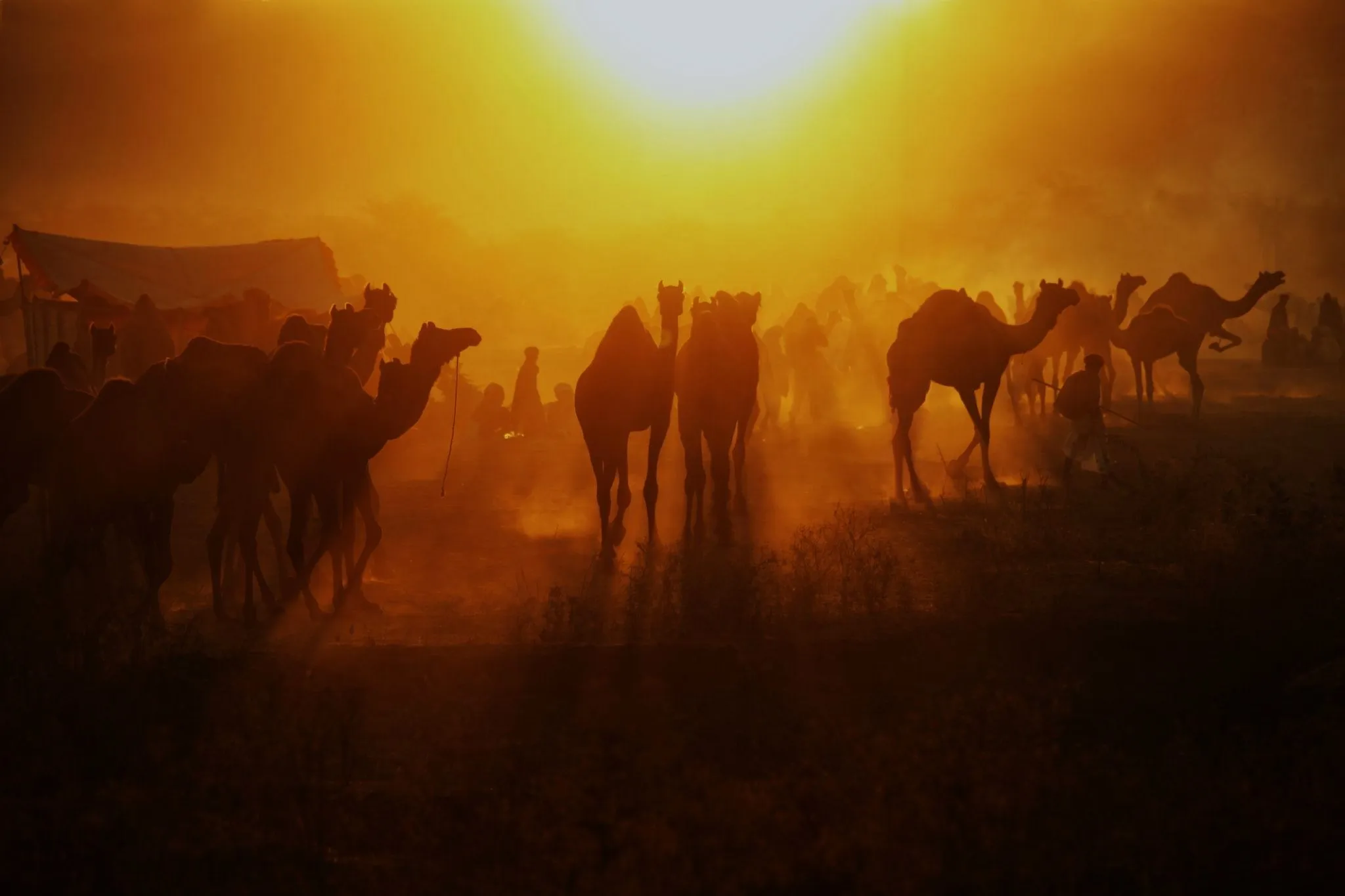
- Early-Morning Camel Grounds – The morning is often the most atmospheric time to explore the livestock area. Camel owners prepare their animals, traders move between groups and the soft light creates excellent conditions for photography.
- Camel Traders & Livestock Traditions – The fair has traditionally been associated with livestock trading, making the camel grounds an important part of the experience. Visitors should remember that this remains a genuine local gathering and should observe rather than interfere with trading activities.
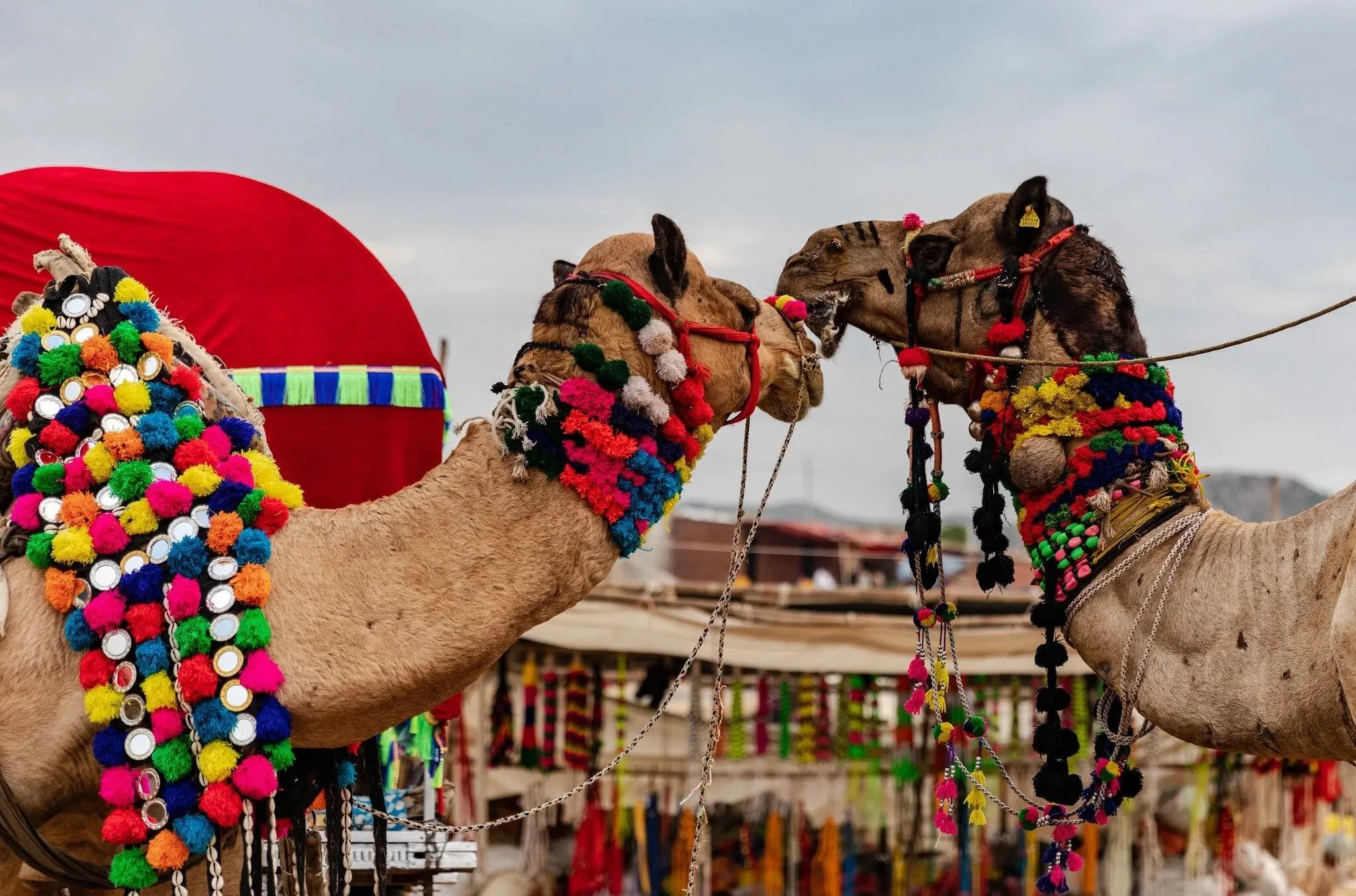
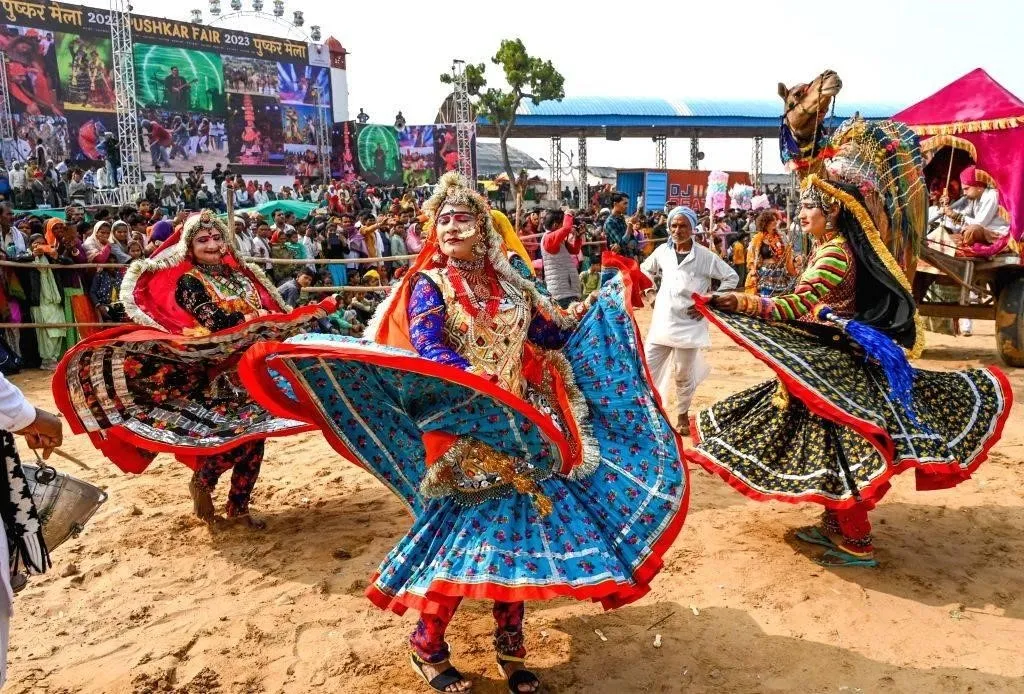
- Colourful Rajasthani Culture – Traditional clothing, turbans, jewellery, music and village communities create a visual experience that feels very different from Rajasthan’s palace and fort destinations.
- Pushkar Lake & Pilgrimage – The spiritual side of Pushkar provides a fascinating contrast to the energy of the fairground. Visitors can explore the ghats around the sacred lake and experience the religious atmosphere of the town.
- Local Markets & Street Life – Around the fair period, Pushkar becomes particularly lively, with temporary stalls, handicrafts, textiles, jewellery, food and local products adding another layer to the experience.
⏰ The Best Time to Visit the Fairground
Early Morning: The most rewarding time for travelers interested in the traditional livestock side of the fair. The temperature is more comfortable, the light is softer and the camel grounds are often particularly atmospheric.
Late Morning: A good time to continue exploring the fairground before taking a break. This is also a useful period for photography, local interactions and observing the changing rhythm of the fair.
Afternoon: The strongest sunshine and heat can make extended walking less comfortable. We often recommend using this time for lunch, relaxation or exploring Pushkar town and its temples.
Late Afternoon & Sunset: As temperatures become more pleasant, the fairground takes on a different character. The warm light, desert landscape and movement of people and animals make this one of the most memorable periods for photography.
💡 What First-Time Visitors Should Know
- The Fair Is Much Larger Than It Looks in Photographs – The livestock areas and temporary fairground activities can spread across a large area. Be prepared for walking and allow more time than you might expect.
- Do Not Expect One Single Show – The Pushkar Camel Fair is a collection of activities taking place across different areas rather than one continuous performance. The experience changes throughout the day.
- Visit More Than Once If Possible – An early-morning visit and a late-afternoon visit can feel like two completely different experiences. A private itinerary makes it easier to return at the most interesting times.
- The Livestock Area Is a Working Environment – Camels and other animals are part of genuine trading and local traditions. Visitors should observe respectfully and avoid treating animals or their owners as photo props.
- Ask Before Taking Close-Up Portraits – Rajasthan is wonderfully photogenic, but a friendly request before photographing people is always the respectful approach.
- Carry Water & Protect Yourself from the Sun – The dry climate, dust and extended walking can be tiring even when temperatures do not initially feel extreme.
- Comfortable Footwear Matters – Expect uneven ground, sand, dust and walking between different areas of the fair.
📸 Photography at the Pushkar Fair
The Pushkar Camel Fair is one of Rajasthan’s most rewarding environments for photography, but the best photographs are often found away from the busiest tourist areas. Early morning can reveal camel owners preparing their animals, while the softer light later in the afternoon brings out the colours of the landscape, textiles and traditional clothing.
Read More Close
For close portraits, always ask permission before taking a photograph. A respectful conversation can often result in a much better photograph than taking a picture from a distance without asking. The same applies to camel owners and their animals.
Keep camera equipment protected from dust, particularly when walking through the livestock areas. A small cleaning cloth and basic protection for lenses can be surprisingly useful. For travelers carrying professional photography equipment, we recommend allowing extra time and avoiding unnecessary movement through crowded areas.
🛕 Pushkar Beyond the Camel Fair
One of the biggest mistakes first-time visitors can make is treating Pushkar as only a camel fairground. The town itself has a very different atmosphere and is one of Rajasthan’s most important pilgrimage centres. Pushkar Lake, the surrounding ghats, temples and narrow streets provide a fascinating contrast to the open landscape of the fair.
A well-planned private experience therefore combines the fairground with time in Pushkar itself. Depending on your interests, the day can include Pushkar Lake, Brahma Temple, local markets, traditional cafés and time to simply walk through the old town before returning to the fairground later in the day.
🗺 Suggested Pushkar Camel Fair Experience
Morning – Discover the Fairground
Begin early with a private transfer to the fairground and explore the camel and livestock areas while activity is building. Take time to observe the traders, animals, traditional dress and morning preparations before the fair becomes busier.
Afternoon – Pushkar Town & Spiritual Heritage
After a break for lunch and relaxation, explore Pushkar's spiritual and cultural side. Visit Pushkar Lake, walk around the ghats and explore the old town and local markets. The pace can be adapted according to your interests and comfort.
Evening – Return for Sunset
Return to the fairground in the late afternoon when the light becomes softer and the atmosphere changes again. This is an excellent time to experience the landscape, capture photographs and enjoy the final moments of the day before returning to your accommodation.
🎒 Practical Tips for International Visitors
- Clothing: Wear light, breathable clothing and carry a light layer for cool mornings and evenings during the fair season.
- Footwear: Choose comfortable shoes suitable for walking on dusty and uneven ground.
- Sun Protection: Sunglasses, sunscreen and a hat are highly recommended.
- Water: Carry safe drinking water when spending extended periods at the fairground.
- Photography: Ask permission before taking close-up portraits and follow instructions around religious activities.
- Dust: Protect cameras, phones and other sensitive equipment from dust around the livestock areas.
- Respect: Remember that Pushkar is a sacred town and the fair is closely connected with local traditions and religious activity.
- Planning: Fair dates, activities, access and local conditions can vary from year to year, so advance itinerary planning is recommended.
🏕 Where to Stay During the Pushkar Camel Fair
Accommodation becomes an important part of planning during the Pushkar Camel Fair. Travelers can choose between staying in Pushkar town, staying at accommodation closer to the fairground or selecting a tented camp for a more atmospheric experience.
The right choice depends on your priorities. Hotels in and around Pushkar may offer greater comfort and easier access to restaurants and the town, while tented accommodation can place you closer to the atmosphere of the event. Availability can become limited during the fair period, particularly for better-located and higher-quality properties, so we recommend arranging accommodation well in advance.
🕰️ How the Fair Changes Through the Day
One of the secrets to enjoying the Pushkar Camel Fair is understanding that it does not have the same atmosphere throughout the day. The fairground changes constantly as traders arrive, animals are prepared, visitors increase and the desert light changes. Rather than trying to see everything in one visit, we recommend experiencing the fair at different times whenever your itinerary allows.
Early Morning: This is one of the best periods for travelers who want to see the traditional livestock side of the fair. The air is cooler, the light is softer and camel owners are busy preparing their animals. The atmosphere is generally more relaxed, making this an excellent time for walking and photography.
Late Morning: Activity gradually increases as more people arrive. This is a good time to continue exploring the livestock grounds, observe the traders and discover the many different groups gathered for the fair.
Afternoon: The combination of stronger sunlight, dust and walking can make this the least comfortable period for extended exploration. We recommend using the middle of the day for lunch, relaxation or sightseeing around Pushkar.
Late Afternoon & Sunset: As the temperature becomes more pleasant, the fairground becomes particularly atmospheric again. The changing light over the desert landscape, camels and colourful clothing creates some of the most memorable photographic moments of the day.
📍 Where to Look for the Real Fair Experience
The Pushkar Camel Fair is not confined to one small attraction where visitors simply arrive, take photographs and leave. The fair spreads across different areas, and each part can offer a different experience. The livestock grounds are particularly interesting for travelers who want to understand the traditional side of the event, while the town and lake reveal the religious and cultural dimension of Pushkar.
Read More Close
The Livestock Areas: This is where travelers can see the traditional side of the fair, including camels and other livestock, their owners and the activity surrounding buying, selling and preparing animals. Visitors should remember that these are genuine working areas and should observe respectfully.
The Fairground: Temporary stalls, local activities, food, crafts and cultural events create a busier and more colourful environment. The atmosphere here changes as the main festival days approach.
Pushkar Town: Walking through the old streets provides a completely different perspective. Shops, cafés, temples and local life continue around the fair, allowing visitors to experience Pushkar beyond the livestock gathering.
Pushkar Lake: The lake and surrounding ghats are central to Pushkar's religious identity. During the fair period, the spiritual atmosphere becomes particularly significant as pilgrims arrive for sacred bathing and religious observances.
🙏 Experience the Fair with Respect
- Remember that this is a living tradition: The fair is not simply a performance arranged for tourists. Many people attending are there for livestock trading, community gatherings or religious reasons.
- Ask before taking close-up portraits: A simple request is the respectful way to photograph camel owners, traders and local families.
- Do not interfere with animals: Avoid touching, feeding or approaching camels and other livestock without permission.
- Dress appropriately around religious areas: Pushkar is an important pilgrimage destination, so modest clothing is recommended around temples, ghats and other sacred places.
- Follow photography restrictions: Some religious ceremonies and temple areas may have restrictions on photography. Always follow local instructions.
- Take time to observe: Some of the most memorable moments are not the obvious staged-looking photographs but the small scenes of everyday interaction, preparation and local life.
🎒 What to Carry to the Fairground
A little preparation makes a surprisingly big difference at the Pushkar Camel Fair. The environment is open, dusty and often sunny, and you may spend several hours walking between different areas.
- Comfortable walking shoes – Expect sand, dust and uneven ground.
- Water – Carry safe drinking water, particularly when spending several hours outdoors.
- Sun protection – Sunglasses, sunscreen and a hat are useful during daytime visits.
- Light scarf or cloth – Helpful for sun, dust and changing conditions.
- Camera protection – Dust can be an issue around the livestock areas, so protect lenses and equipment.
- Small day bag – Keep belongings light because walking is an important part of the experience.
🌤 Best Time to Experience the Pushkar Camel Fair
The Pushkar Camel Fair is held annually around the Kartik Purnima period, with the exact dates changing each year according to the Hindu lunar calendar. The fair period generally falls during October or November, when the weather in Rajasthan is considerably more comfortable than during the hotter months.
For travelers planning around the fair, it is important to check the dates for the specific year and book accommodation and transport well in advance. The experience can become particularly busy around the main religious and festival days, while the earlier livestock-focused period may offer a different atmosphere for travelers interested in photography and local traditions.
❓ Frequently Asked Questions (FAQ)
When is the Pushkar Camel Fair held?
The fair is held annually around Kartik Purnima, with exact dates changing each year. Always check the dates for your intended travel year before making arrangements.
How many days should I spend at the Pushkar Camel Fair?
One full day can provide a good introduction, but two nights allow a more relaxed experience and make it possible to visit the fair at different times of day while also exploring Pushkar.
Is the Pushkar Camel Fair suitable for international travelers?
Yes. The fair is particularly rewarding for travelers interested in Rajasthan’s culture, photography, local traditions and experiences beyond the major forts and palaces.
Can I visit the Pushkar Camel Fair privately?
Yes. A private vehicle and driver provide flexibility to visit the fairground, return to your accommodation, explore Pushkar and revisit the fair at the most suitable times.
Can I take photographs of camel traders?
Photography is generally part of the experience, but close-up portraits should be taken respectfully and with permission. Visitors should also follow any instructions around religious ceremonies and sacred spaces.
Should I stay in Pushkar or near the fairground?
Both options have advantages. Staying in Pushkar provides convenient access to the town and its restaurants and temples, while accommodation closer to the fairground can make early-morning and late-afternoon visits easier. Availability during the fair period can be limited, so advance planning is recommended.
Can the Pushkar Camel Fair be combined with a Rajasthan tour?
Absolutely. Pushkar works particularly well with Jaipur, Ajmer, Jodhpur, Udaipur and other Rajasthan destinations. Your itinerary can be designed around the fair dates and your preferred pace of travel.
Experience Pushkar Beyond the Photographs
Experience the Pushkar Camel Fair with a private itinerary planned around the rhythm of the fair, the best times for exploration and the cultural interests of your journey. Combine the fair with Pushkar sightseeing and continue your Rajasthan journey at your own pace.
✔ Private Tours • ✔ Flexible Itineraries • ✔ Personalized Travel Planning
Combine your Pushkar experience with: Jaipur · Ajmer · Jodhpur · Udaipur