

Somnath Sightseeing Guide
The Shore Temple, Sacred Rivers & Krishna's Last Journey
Explore the First Jyotirlinga on Gujarat's Arabian Sea Coast
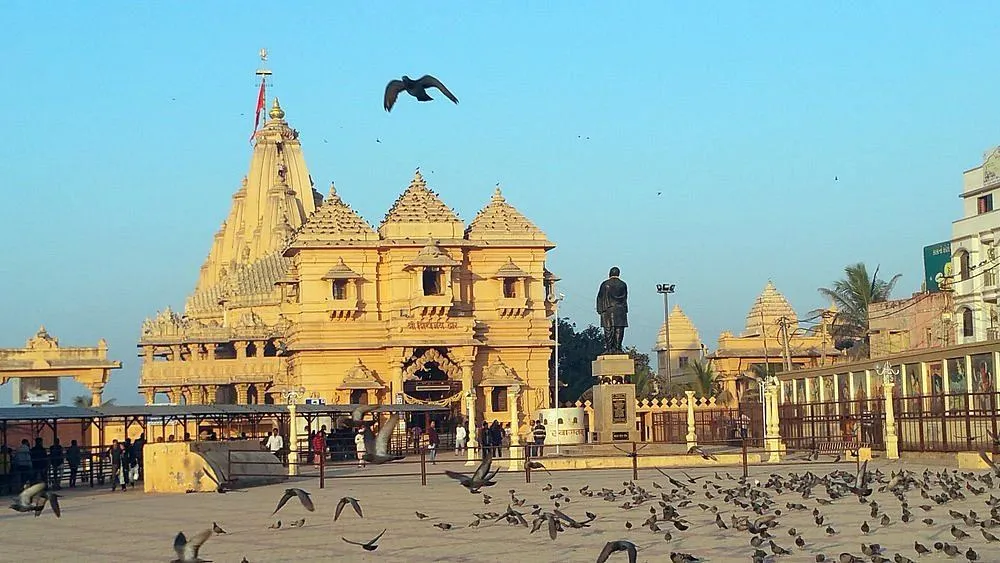
Somnath, at Prabhas Patan beside the Arabian Sea, is regarded as the first of the twelve Jyotirlingas of Lord Shiva. Tradition says the moon god Soma was freed from a curse here, which gives the shrine its name. The temple has been destroyed and rebuilt many times over the centuries, and the present Chaulukya-style temple was completed in 1951. Standing on the shore, with the sound of the waves behind the temple bells, it is among the most atmospheric pilgrimage sites in India.
This guide covers the temple and the sacred sites around it, a 2-day plan, how to reach Somnath, where to stay and the practical details on aarti times, phone rules and crowds. Most travellers stay one night, so that they can see both the morning aarti and the evening light and sound show.
Plan Your Somnath Trip →
Somnath at a Glance
- Location: Prabhas Patan, near Veraval, on the Saurashtra coast, Gujarat
- Main sight: Somnath Temple, one of the twelve Jyotirlingas
- Also nearby: Triveni Sangam, Bhalka Tirth, the museum and Veraval harbour
- Evening highlight: The temple light and sound show
- Best for: Pilgrims, culture lovers, couples and photographers
- Suggested stay: 1 night (2 nights with Gir or Diu)
- Best time: October to March
- Getting around: Private car, with the temple and beach on foot
Somnath Temple
The temple stands on a raised platform facing the sea, with a tall spire and carved stone detail in the Chaulukya style. Daily worship includes aarti at around dawn, midday and dusk, though timings can change, and the morning and evening aartis are the most atmospheric. Security is tight, and mobile phones and cameras are usually not allowed inside, so leave them in the lockers outside. Dress modestly, expect queues at weekends and on Mondays, which are special for Shiva, and allow around one to two hours.
Baan Stambh and Somnath Beach
On the sea wall beside the temple, the Baan Stambh (arrow pillar) carries an inscription saying that in a straight line from this point to the South Pole there is no land. The beach beside the temple is a pleasant place for a sunset walk, with the temple lit up behind you. Treat the sea with care, as the waves can be strong and swimming is not advised.
The Evening Light and Sound Show
After dark, a light and sound show tells the story of Somnath's history, destruction and rebuilding, with the lit temple as the backdrop and the sea behind it. It runs in the evening and lasts around 45 minutes, in Hindi with some other languages offered. Check the current timings and booking arrangements on the day, as they can change with the season.
Triveni Sangam and Gita Mandir
Triveni Sangam, a short drive from the temple, is where the Hiran, Kapila and Saraswati rivers meet before flowing into the sea. It is a sacred bathing place, with ghats and small temples nearby, including the Gita Mandir. It is quiet and reflective in the morning, and busier with pilgrims during festivals.
Bhalka Tirth
Bhalka Tirth, a few kilometres from the temple on the road towards Veraval, is the place where, according to tradition, Lord Krishna was struck by a hunter's arrow before leaving the earthly world. A small temple and a reclining statue of Krishna mark the spot, set in a quiet compound. It is a short, reflective stop.
Old Somnath Temple and the Prabhas Patan Museum
Nearby, the Old Somnath Temple was built in the 18th century by the Maratha queen Ahilyabai Holkar after the original shrine was destroyed, and it is quieter and smaller than the main temple. The Prabhas Patan Museum displays sculptures, inscriptions and temple fragments from earlier versions of Somnath. Check the museum's opening days locally, as small museums often have a weekly closing day.
Veraval Fishing Harbour
About 7 km from the temple, Veraval is a busy fishing port, known for its wooden boat-building yard, where large traditional vessels are still built by hand. The harbour is lively and photogenic in the morning and late afternoon. Access to the yards can vary, so ask locally and keep out of the way of working crews.
Suggested 2-Day Plan for Somnath
Day 1: Arrival, Sunset and the Evening Show
- Afternoon: Arrive and check in
- 3:30 PM: Triveni Sangam and Gita Mandir
- 5:00 PM: Somnath beach, Baan Stambh and the sunset
- 7:00 PM: Evening aarti at the temple
- 8:00 PM: Light and sound show, subject to timings
Day 2: Temple, Krishna Sites and Veraval
- 6:30 AM: Morning darshan and aarti, before the crowds build
- 9:00 AM: Old Somnath Temple and the Prabhas Patan Museum
- 11:00 AM: Bhalka Tirth
- 12:30 PM: Gujarati lunch
- 2:30 PM: Veraval harbour and the boat-building yard
- 4:30 PM: Free time, or continue to Gir, Junagadh or Diu
Only one day? Start with the morning aarti and darshan, add Triveni Sangam and Bhalka Tirth, and stay for sunset and the evening show if your timing allows. Third day? Add Gir National Park, Junagadh or the beaches near Diu.
How to Reach Somnath
- By road: Gir National Park is roughly 60 km away, Junagadh about 85 km, Diu about 85 km, Rajkot roughly 190 km and Ahmedabad about 400 km. A private car with driver is the easiest way to link the Saurashtra coast.
- By rail: Veraval Junction, about 7 km away, is the main railhead, with trains from Ahmedabad, Rajkot and Mumbai. Check current schedules.
- By air: Keshod and Diu have limited flights, and Rajkot is the larger gateway, followed by a road transfer. Check current schedules before booking.
Where to Stay in Somnath
- Temple-trust guesthouses: Simple, clean rooms close to the temple, popular with pilgrims and often booked in advance.
- Hotels near the temple and beach: A range of mid-range hotels within a short walk of the shore.
- Veraval: More hotel choice, about 7 km away, which suits travellers who arrive late or leave early.
Best Time to Visit Somnath
October to March is the best time, with pleasant weather for the temple and the beach. Maha Shivratri, usually in February or March, and the Kartik Purnima fair in November draw very large crowds, as does the month of Shravan, usually in July or August, so book early and expect long queues. April to June is hot and humid. The monsoon, from June to September, brings rough seas and heavy rain, though the coast is green.
Travel Tips for Somnath
- Leave phones and cameras in the lockers, as they are usually not allowed inside the temple.
- Dress modestly, and remove footwear at the temple.
- Visit early in the morning or at dusk, when queues are shorter.
- Expect long queues on Mondays, in Shravan and at festivals.
- Check the light and sound show timings and the museum opening days.
- Do not swim in the sea, as the waves and currents are strong.
- Carry water and sun protection, and some cash for small offerings.
- Book temple-trust guesthouses and hotels early in festival months.
Nearby Places to Combine with Somnath
Somnath is a natural stop on a Saurashtra circuit. Gir National Park is roughly 60 km away, and Junagadh with its fort and Girnar hill is about 85 km away. Near Diu, the quiet beach of Ahmedpur Mandvi is roughly 90 km along the coast. Further on, Palitana adds the Jain hill temples, and Ahmedabad is the usual start or end of the trip. For ready-made routes, see our Gujarat tour packages, or arrange a private chauffeur for the road legs.
Plan Your Somnath Visit with Us
Tell us your dates and pace, and we will shape a suggested plan around your interests. It can include a stay near the temple, a private air-conditioned car with driver, a local guide for the temple and the Krishna sites, and timings planned around the aartis and the evening show.
Plan Your Somnath Visit →Why Plan Somnath with Us
- Itineraries are suggested routes that we tailor to your dates, interests and pace.
- Days are timed around the aartis, the evening show and festival crowds.
- Local drivers and guides who understand the temple rules and etiquette.
- Somnath combines easily with Gir, Junagadh, Diu and Palitana.
Frequently Asked Questions
How many days do you need in Somnath?
One night is ideal, so you can see the morning aarti and the evening light and sound show. One day covers the main sights.
Are phones allowed inside Somnath Temple?
Mobile phones and cameras are usually not allowed inside, and lockers are provided outside. Check the current rules on the day.
When is the best time for darshan?
Early morning or around dusk, when queues are shorter. Mondays, Shravan and festivals are the busiest.
Is the light and sound show worth staying for?
Yes, it adds a lot of context about the temple's history, and the lit temple by the sea is memorable. Check the timings first.
Can the plan be changed?
Yes. The plan above is a suggested route, and we can adjust it to your interests, aarti timings and the season.
Is Somnath suitable for families and senior travellers?
Yes. The temple area is largely level and easy to walk, though queues can be long at peak times, so visit early and carry water.