

Ahmedabad Sightseeing Guide
Heritage Lanes, Stepwells & Street Food in Gujarat
Explore India's First UNESCO World Heritage City
Ahmedabad was founded in 1411 by Sultan Ahmed Shah I, and in 2017 its walled old city became India's first UNESCO World Heritage City. Carved wooden havelis, tightly packed pol neighbourhoods, Indo-Islamic mosques and busy bazaars sit alongside Gandhi's Sabarmati Ashram, a riverfront promenade and a modern city. A short drive north, the Adalaj Stepwell and Swaminarayan Akshardham add very different monuments.
This guide covers the main sights, a 2-day plan, how to reach Ahmedabad, where to stay and the practical details, such as closing days and advance bookings, that decide how smoothly the days run. Most travellers stay one or two nights, and the city is also a good base for Modhera, Patan and Lothal.
Plan Your Ahmedabad Trip →
Ahmedabad at a Glance
- Location: Western India, on the Sabarmati River, Gujarat
- UNESCO status: Historic City of Ahmedabad, inscribed 2017
- Founded: 1411, under Sultan Ahmed Shah I
- Known for: Pols, mosques, stepwells, Gandhi's ashram, textiles and Gujarati food
- Best for: History, architecture, photography and food lovers
- Suggested stay: 2 nights (1 night minimum)
- Best time: October to March
- Getting around: Private car for the outskirts, on foot in the old city
How Ahmedabad Is Laid Out
Plan Ahmedabad in three parts. The walled old city east of the river holds the pols, Jama Masjid, Teen Darwaza, Bhadra Fort, Manek Chowk and Sidi Saiyyed Mosque, all close enough to cover on foot or by short rides. West of the river are Sabarmati Ashram, the riverfront, Kankaria Lake and the Calico Museum. North of the city, Adalaj Stepwell is about 19 km away and Akshardham in Gandhinagar roughly 30 km. Grouping your sightseeing this way avoids crossing the city repeatedly.
The Old City and Its Pols
Ahmedabad's old city is built around pols, clusters of houses sharing one gateway and a courtyard, with richly carved wooden fronts, bird feeders and small shrines. Organised heritage walks usually begin at the Swaminarayan Temple in Kalupur around 8 AM and wind through the pols for about two hours, which is the best way to see them. Go in the morning, when the lanes are quiet, and dress modestly, as residents live and pray here.
Jama Masjid, Teen Darwaza and Bhadra Fort
Jama Masjid, built in 1424 in yellow sandstone, has a forest of carved pillars under its prayer hall and a calm courtyard. Close by, Teen Darwaza is a triple gateway that once led to the royal square of Bhadra Fort, the citadel Ahmed Shah built in 1411. Dress modestly, remove footwear at the mosque and visit outside prayer times, especially around midday on Fridays.
Sidi Saiyyed Mosque and Its Jali
Built in 1573, this small mosque is famous for the stone lattice windows on its western wall, carved with intertwining tree and palm motifs. The pattern has become a symbol of the city. Visit in the afternoon, when light passes through the lattice and throws patterns on the floor.
Sabarmati Ashram
Mahatma Gandhi lived and worked at Sabarmati Ashram from 1917 to 1930, and the 1930 Dandi Salt March began here. The riverside grounds hold his simple living quarters, a museum and a quiet prayer ground. Entry is generally free, and the ashram is usually open from morning to early evening, but check current timings, as parts of the precinct have been under redevelopment. Combine it with a sunset walk along the nearby riverfront.
Adalaj Stepwell
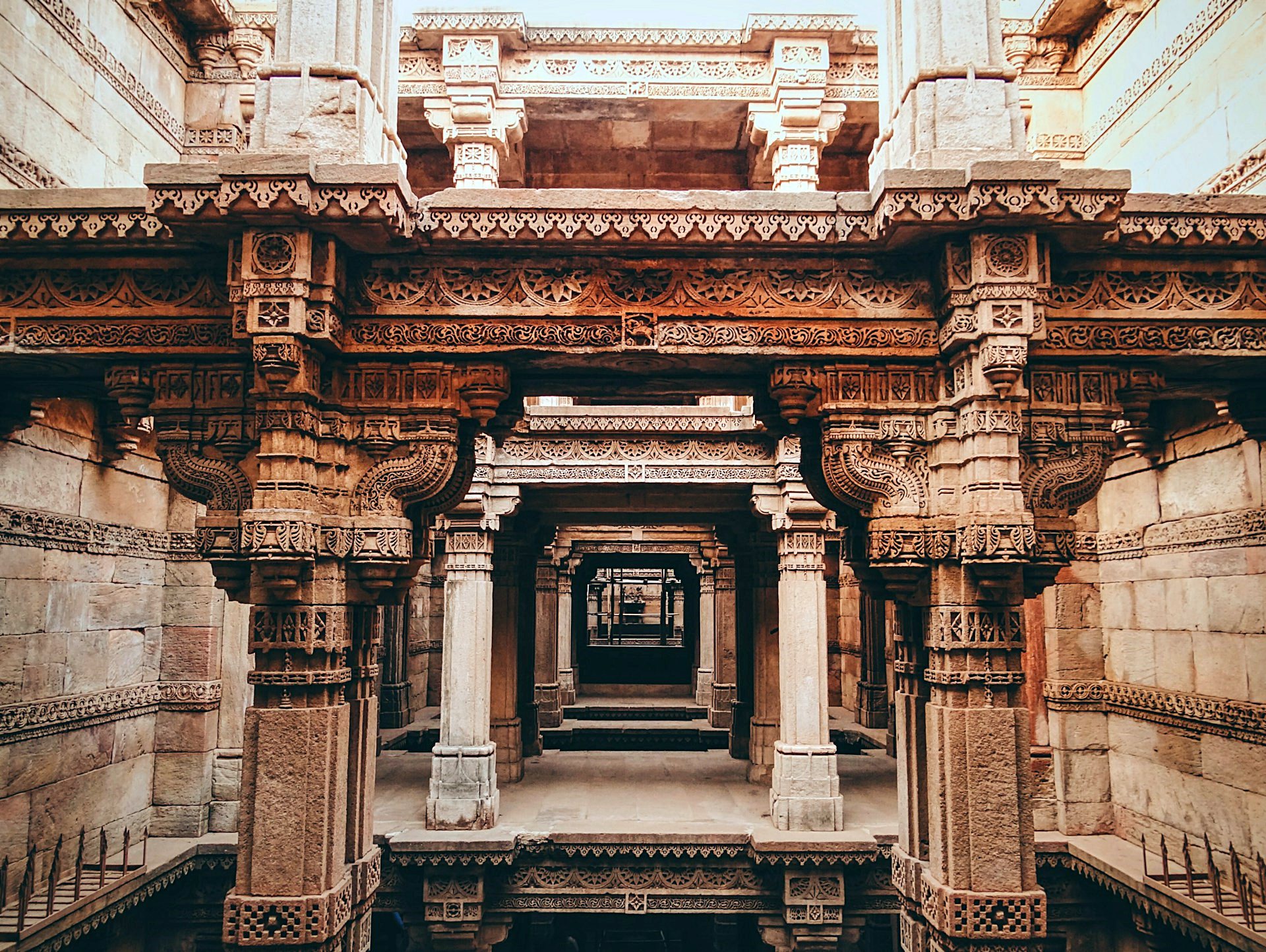
Built in 1498, Adalaj Stepwell is a five-storey stepwell about 19 km north of the city, with octagonal landings, carved pillars and niches that blend Hindu and Islamic motifs. The temperature drops noticeably as you descend, and the carving is best seen in the soft light of the morning or late afternoon. The steps are worn and can be slippery, so wear shoes with grip.
Swaminarayan Akshardham, Gandhinagar
Akshardham is a large pink sandstone temple complex in Gandhinagar, roughly 30 km from Ahmedabad, with finely carved halls, exhibitions and an evening water show. It is usually closed on Mondays. Security is strict, and phones, cameras and bags are not allowed inside, so leave them in the lockers at the entrance. Allow at least two hours. Within the old city, the Swaminarayan Temple at Kalupur, built in 1822, is a smaller and older example of carved wooden temple architecture.
Calico Museum of Textiles
The Calico Museum holds one of India's finest textile collections, from block prints and brocades to carved wooden haveli interiors. Visits are by guided session only, usually booked in advance, and photography is not allowed. The museum is usually closed on Wednesdays and has age limits for children, so check booking rules and session times before planning your day.
Manek Chowk and Gujarati Food
Manek Chowk is a market square that runs as a jewellery and vegetable market by day and turns into a lively street-food hub after dark. Gujarati food leans vegetarian and slightly sweet, with thalis, dhokla, khaman, fafda with jalebi and farsan snacks all worth trying. Nearby, Rani no Hajiro is a tomb complex with a market lane for jewellery, and Law Garden has an evening market for textiles and handicrafts. Choose busy stalls with fresh food and drink bottled water.
Sabarmati Riverfront and Kankaria Lake
The Sabarmati Riverfront is a long promenade with gardens and the Atal Pedestrian Bridge, pleasant at sunset. Kankaria Lake is a popular family spot with a promenade and attractions, and it is busiest in the evening and at weekends. Both are easy additions to the end of a day.
Day Trips: Modhera, Patan and Lothal
Ahmedabad is a good base for longer excursions. The 11th-century Sun Temple at Modhera is about 100 km away, and the UNESCO-listed Rani ki Vav stepwell at Patan lies roughly 35 km beyond, so the two pair well in one full day. Lothal, an ancient Harappan port site with a maritime heritage museum, is about 80 km southwest and suits a separate day.
Suggested 2-Day Plan for Ahmedabad
Day 1: Old City, Gandhi and the River
- 8:00 AM: Heritage walk through the pols, starting at the Swaminarayan Temple in Kalupur
- 10:30 AM: Jama Masjid, Teen Darwaza and Bhadra Fort
- 12:30 PM: Gujarati thali lunch
- 2:00 PM: Sidi Saiyyed Mosque and its jali
- 3:30 PM: Sabarmati Ashram
- 5:30 PM: Sabarmati Riverfront at sunset
- 8:00 PM (optional): Street food at Manek Chowk
Day 2: Stepwell, Akshardham and Textiles
- 9:00 AM: Adalaj Stepwell, about 40 minutes' drive
- 10:30 AM: Swaminarayan Akshardham in Gandhinagar (not on Mondays)
- 1:00 PM: Lunch
- 2:30 PM: Calico Museum of Textiles, by pre-booked session (not on Wednesdays)
- 5:00 PM: Law Garden market or Kankaria Lake
Third day? Add Modhera and Patan, or Lothal. Only one day? Do the old city walk and Jama Masjid in the morning, Sabarmati Ashram after lunch, Adalaj Stepwell late in the afternoon, and Manek Chowk for dinner.
How to Reach Ahmedabad
- By air: Sardar Vallabhbhai Patel International Airport is roughly 8 to 9 km from the centre, with domestic flights across India and some international routes.
- By rail: Ahmedabad Junction (Kalupur) is well connected, with fast trains from Mumbai, Delhi and other major cities. Check current schedules and journey times.
- By road: Vadodara is about 110 km away, Udaipur and Mount Abu roughly 4 to 6 hours, and Mumbai about 530 km. A private car with driver suits onward travel through Gujarat.
Where to Stay in Ahmedabad
- Old city: Heritage havelis converted into guesthouses and hotels, which put you among the pols and close to the morning heritage walk.
- Ashram Road and the riverfront: Established hotels with easy access to Sabarmati Ashram and the western side of the river.
- SG Highway and the airport side: Modern business hotels and resorts, convenient for arrivals and for trips north, but further from the old city.
Best Time to Visit Ahmedabad
October to March is the best time, with comfortable weather for walking the old city. December and January are cool and pleasant. April to June is very hot, so keep sightseeing to early mornings and evenings. The monsoon, from July to September, is humid with heavy showers. Two festivals shape the calendar: Navratri, usually in September or October, fills the city with garba dancing, and Uttarayan, the kite festival around 14 January, fills the skies. Both bring crowds, so book stays early.
Travel Tips for Ahmedabad
- Check closing days: Akshardham is usually closed on Mondays and the Calico Museum on Wednesdays.
- Book the Calico Museum in advance, as visits are by guided session only.
- Akshardham does not allow phones, cameras or bags inside, so leave them in the lockers.
- Dress modestly at mosques and temples, and remove footwear where asked.
- Walk the old city in the morning, when the lanes are quiet and cool.
- Carry bottled water and pick busy street food stalls.
- Gujarat has alcohol prohibition, so check the rules if this matters to you.
- Traffic is heavy at peak hours, so allow extra time between areas.
Nearby Places to Combine with Ahmedabad
Ahmedabad is the usual starting point for a wider Gujarat route. Heading to Saurashtra, you can continue to Gir National Park for lions, Junagadh for its fort and Girnar hill, Palitana for the Jain temples, and Somnath for the coastal temple. Travelling north-west, Mount Abu is roughly 4 to 5 hours away by road. For ready-made routes, see our Gujarat tour packages, or arrange a private chauffeur for the road legs.
Plan Your Ahmedabad Visit with Us
Tell us your dates and pace, and we will shape a suggested plan around your interests. It can include a heritage haveli or city hotel, a private air-conditioned car with driver, a local guide for the old city walk, and advance bookings for places like the Calico Museum.
Plan Your Ahmedabad Visit →Why Plan Ahmedabad with Us
- Itineraries are suggested routes that we tailor to your dates, interests and pace.
- Days are grouped by area and timed around closing days and advance bookings.
- Local guides bring the old city, its pols and its history to life.
- Ahmedabad combines easily with Gir, Junagadh, Palitana, Somnath and Mount Abu.
Frequently Asked Questions
How many days do you need in Ahmedabad?
Two days cover the old city, Sabarmati Ashram, Adalaj Stepwell, Akshardham and the Calico Museum at an easy pace. One day covers the highlights.
Is Ahmedabad a UNESCO World Heritage City?
Yes. The historic walled city was inscribed in 2017, the first Indian city to receive this status.
Is Akshardham in Ahmedabad?
No. Swaminarayan Akshardham is in Gandhinagar, roughly 30 km north of Ahmedabad, and is usually closed on Mondays.
Do I need to book the Calico Museum in advance?
Yes. Visits are by guided session only, so check booking rules and session times before planning your day.
Can the plan be changed?
Yes. The plan above is a suggested route, and we can adjust it to your interests, closing days and the season.
Is Ahmedabad suitable for families?
Yes. Temples, the riverfront and Kankaria Lake suit all ages. The old city walk involves walking on uneven lanes, and the Calico Museum has age limits for children, so check before booking.