

Shirdi Sightseeing Tour
Sai Baba Temple and Darshan Guide
Samadhi Temple, Dwarakamai, Chavadi and a 2-Day Plan in Maharashtra’s Best-Known Pilgrimage Town
Shirdi, in the Ahmednagar district of Maharashtra, is one of India’s most-visited pilgrimage towns. Devotees of Sai Baba, a saint who lived here from the late 19th century until 1918 and is revered by Hindus and Muslims alike, come from across India and from abroad. The town is built around the Samadhi Temple, and the lanes around it are lined with flower sellers, prayer-item shops and sweet stalls. Daily aartis, queues and chanting set the rhythm of the day, and the atmosphere is both devout and busy.
This guide covers what to see, how darshan works in practice, how to plan two days, how to reach Shirdi and when to go. Most travellers stay one or two nights, often as part of a longer Maharashtra tour, and Shirdi pairs naturally with Nashik, Aurangabad, Ajanta and Ellora and Mumbai.
Plan Your Shirdi Visit →
Shirdi at a Glance
- Destination: Shirdi, Maharashtra
- Known for: Sai Baba Samadhi Temple, Dwarakamai, Chavadi, Lendi Baug and the daily aartis
- Distance from Mumbai: About 240 to 250 km, usually 5 to 6 hours
- Distance from Pune: About 185 km, usually 4 hours
- Distance from Nashik: About 90 km, usually 2 hours
- Suggested time: One night, or two nights if you add Shani Shingnapur
- Best for: Pilgrims, families, older travellers and anyone interested in Sai Baba’s story
- Best time: October to March for comfortable weather; weekdays for shorter queues
- Darshan: Free general queues and online booking options exist. Queue times vary widely, and phones and bags are usually not allowed inside
Top Things to See and Do in Shirdi
Most of what matters in Shirdi lies within walking distance of the Samadhi Temple. Visitors are asked to dress modestly, remove shoes and follow the temple’s rules on bags, phones and offerings, which change from time to time.
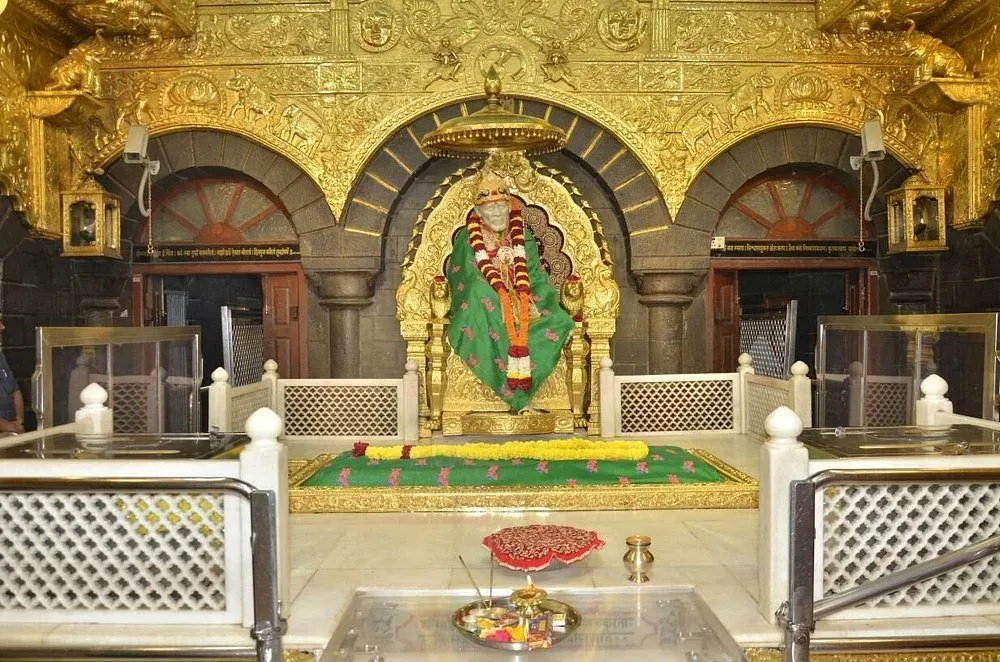
Sai Baba Samadhi Temple
The Samadhi Temple, built around Sai Baba’s resting place, is the heart of Shirdi. Devotees queue through covered halls for darshan, and four daily aartis, at dawn, midday, sunset and night, bring the biggest gatherings. Aarti times shift with the season, so check the current schedule. Queues can run from under an hour on a quiet weekday morning to several hours on Thursdays, weekends and festival days. Allow plenty of time.
Dwarakamai
Dwarakamai is the old mosque where Sai Baba lived for many years. A sacred fire, the Dhuni, is said to have burned here since his time, and devotees take a pinch of its ash, known as udi, as a blessing. Visitors can also see objects associated with his daily life. It is a short walk from the temple.
Chavadi
Chavadi is a small building where Sai Baba slept on alternate nights. A procession carrying his portrait and sandals between Dwarakamai and Chavadi is held on Thursdays, usually in the evening, and draws large crowds. The building is quiet at other times.
Gurusthan
Gurusthan is a small shrine under a neem tree, where, according to tradition, Sai Baba was first seen as a young man. It is a short, peaceful stop for those who want to follow the story from the beginning.
Lendi Baug
Lendi Baug is a quiet garden where Sai Baba used to walk and tend plants. A lamp known as the Nanda Deep is said to have been kept burning here since his time. It is one of the calmer places in town, and a good break from the queues.
Khandoba Mandir
This small temple of Khandoba is where, tradition says, a temple priest first greeted Sai Baba on his arrival in Shirdi and gave him the name by which he is known. It is a short visit that rounds out the story.
Sai Heritage Village
Sai Heritage Village is a recreated village with scenes from Sai Baba’s life and from rural Maharashtra, popular with families and a gentler experience than the queues at the temple. Opening times and entry arrangements vary, so we check them when planning.
Shani Shingnapur (Optional)
About 70 km from Shirdi, usually 1.5 to 2 hours by road, Shani Shingnapur is a village temple dedicated to Lord Shani, famous for houses built without locked doors. It is a morning’s excursion in its own right, so we plan it as a separate half-day, not an extra stop on the temple day.
Temple Streets, Prasadalaya and Local Markets
The lanes around the temple sell flowers, incense, photographs, sweets and devotional souvenirs. Sai Prasadalaya, the large dining hall run by the temple trust, serves simple vegetarian meals to very large numbers of visitors, and there are many restaurants nearby. The streets are liveliest around the evening aarti.
How Darshan Works
- General queue: Free and open to all. Waiting time varies a great deal with the day and the season.
- Online booking: The temple trust offers online darshan and aarti booking through its official website, which can shorten the wait. Availability and rules change, so we advise on the current system when you book.
- Bags and phones: Bags, phones and cameras are usually not allowed inside the complex, and lockers are provided near the gates. Travel light.
- Offerings: Rules on flowers, garlands and prasad inside the complex change, so check before you buy anything for the temple.
- Dress: Cover shoulders and knees, and be ready to remove shoes.
Suggested 2-Day Shirdi Plan
The timings below are standard timings, shown only to give an idea of how long each part of the day takes. You can start at a time of your choice, and the order may change with queues, aarti timings and temple rules.
Day 1: Darshan and the Sai Baba Story
- Approx. 7:00 AM: Join the queue for darshan at the Samadhi Temple. Allow 1 to 3 hours.
- Approx. 10:30 AM: Dwarakamai and Chavadi, about 1 hour.
- Approx. 11:45 AM: Gurusthan, Lendi Baug and Khandoba Mandir, about 1.5 hours.
- Approx. 1:15 PM: Lunch at Sai Prasadalaya or a nearby restaurant.
- Approx. 3:00 PM: Rest, or visit Sai Heritage Village.
- Approx. 5:30 PM: Temple streets, then the sunset aarti if you wish to attend.
Day 2: Shani Shingnapur or Onward
- Approx. 7:00 AM: Drive to Shani Shingnapur, about 1.5 to 2 hours.
- Approx. 9:00 AM: Temple visit and a walk through the village, about 1.5 hours.
- Approx. 11:30 AM: Return towards Shirdi, with lunch on the way.
- Afternoon: Onward to Nashik or Aurangabad, or an easy afternoon in Shirdi.
If you only have one day: concentrate on darshan, Dwarakamai and Chavadi, with one or two of the smaller sites, and skip Shani Shingnapur. A single day is enough for the main experience, but it is tiring if the queue is long.
How to Reach Shirdi
- By air: Shirdi has its own airport at Kakadi, about 15 km from the town, with flights from Mumbai, Delhi, Hyderabad, Bengaluru and some other cities. Schedules change, so check current services.
- By rail: Sainagar Shirdi railway station has trains from Mumbai, Chennai, Bengaluru and other cities. Connections vary, so check current timetables.
- By road: About 240 to 250 km from Mumbai (5 to 6 hours), 185 km from Pune (about 4 hours) and 90 km from Nashik (about 2 hours). Aurangabad is about 130 km, usually 2.5 to 3 hours.
- In Shirdi: Most sights are within walking distance of the temple, and your private car and driver cover the longer trips.
Where to Stay in Shirdi
Shirdi has a very wide range of stays, from simple pilgrim lodges and trust-run accommodation to comfortable hotels and resorts. Staying within walking distance of the temple saves a lot of time on darshan days, though rooms there are busier and noisier. Rooms fill quickly on Thursdays, weekends, school holidays and festivals, so book early. Tell us your dates and the style of stay you prefer, and we will suggest places to match.
Best Time to Visit Shirdi
Shirdi can be visited all year, but queues and weather vary.
- October to March: Warm days and cool mornings and evenings, the most comfortable time for queues and walking. The busiest season, especially around Diwali and New Year weekends.
- April to June: Hot, with high daytime temperatures. Go early in the morning, and carry water.
- July to September: The monsoon cools the town and brings green fields, though rain can be heavy. Guru Purnima, usually in July, and Vijayadashami bring very large crowds.
- Weekdays and mornings: Thursdays, weekends and festival days are much busier than ordinary weekdays, so a Tuesday or Wednesday morning is the easiest time for darshan.
Travel Tips for Shirdi
- Go early: Queues are shortest in the first hours after opening.
- Travel light: Leave bags, phones and cameras in the car or the lockers, and carry only what you need.
- Dress modestly: Cover shoulders and knees, and wear shoes that are easy to take off.
- Check the rules: Offerings, queue systems and booking options change, so we confirm the current arrangements before you go.
- Avoid the peaks: Thursdays, weekends and festivals are far busier, so choose weekdays if you can.
- Carry some cash: Small shops, rickshaws and offerings are easier to pay for in cash.
Nearby Places to Combine with Shirdi
Shirdi fits easily into a wider Maharashtra route. Combine it with Nashik for the Godavari ghats and Trimbakeshwar, Aurangabad, Ajanta and Ellora for the great cave temples, Pune for forts and palaces and Mumbai for the harbour city.
Maharashtra tours that include Shirdi:
- Best of Maharashtra tour (11 nights / 12 days)
- Maharashtra caves and temple tour (13 nights / 14 days)
Plan Your Shirdi Visit
Tell us your dates, how many of you are travelling and whether you would like to include Shani Shingnapur or continue to Nashik or Aurangabad. We will plan around the queues and the festival calendar and suggest a stay that suits you, with a private car and driver.
Plan My Shirdi Trip →Why Plan Shirdi with Us
- Queue-aware planning: We plan around darshan timings and the busiest days, so you spend less time waiting.
- Clear guidance on rules: We explain bags, phones, offerings and dress code beforehand, so there are no surprises at the gate.
- Flexible timing: You choose your start time, and we adapt to the queue and the weather.
- Easy to combine: Add Nashik and Ajanta and Ellora for a wider Maharashtra journey, or see our private chauffeur service in India.
Frequently Asked Questions
How many days do I need in Shirdi?
One full day covers darshan and the main sites. Stay two nights if you want to add Shani Shingnapur or if you prefer a calmer pace.
How long is the darshan queue?
It varies from under an hour on a quiet weekday morning to several hours on Thursdays, weekends and festival days. Online booking can help, and we advise on the current options.
Can I take my phone or bag into the temple?
Usually not. Bags, phones and cameras are normally not allowed inside the complex, and lockers are provided near the gates. Rules can change, so we confirm them before you go.
What are the aarti timings?
There are four daily aartis, at dawn, midday, sunset and night. Timings shift with the season, so check the current schedule on the temple trust’s official website.
How far is Shani Shingnapur from Shirdi?
About 70 km, usually 1.5 to 2 hours each way, so we plan it as a separate half-day trip.
What is the best time to visit Shirdi?
October to March for comfortable weather. Weekday mornings have the shortest queues, while Thursdays, weekends and festivals are much busier.
Is Shirdi suitable for families and older travellers?
Yes. Most sights are within walking distance, and the temple has arrangements for older visitors. Long queues can be tiring, so plan for rest and water.
Can I combine Shirdi with Nashik and Aurangabad?
Yes. Nashik is about two hours away, and Aurangabad about three. See our Best of Maharashtra tour and our Maharashtra caves and temple tour.
Explore More Places in Maharashtra
Continue your Maharashtra journey with more places to explore. After Shirdi, visit the Godavari ghats of Nashik, the cave temples of Ajanta and Ellora, the forts and palaces of Pune or the harbour city of Mumbai, or see our tours that link them together.