

Nashik Sightseeing Tour
Panchavati, Trimbakeshwar and Sula Guide
Godavari Ghats, an Ancient Jyotirlinga, Buddhist Caves, Vineyards and a 2-Day Plan in Nashik (Nasik)
Nashik, also spelt Nasik, sits on the banks of the Godavari River in northern Maharashtra and is one of India’s oldest pilgrimage cities. Panchavati, its sacred quarter, is linked in tradition with the Ramayana and with the exile of Rama, Sita and Lakshmana. Ramkund draws pilgrims for morning rituals, Trimbakeshwar, about 30 km away, is one of the twelve Jyotirlingas, and a short drive from the city, rows of vineyards have made Nashik India’s best-known wine region.
This guide covers what to see, how to plan two days, the Simhastha Kumbh Mela now under way, how to reach Nashik and when to go. Many travellers stay one or two nights as part of a longer Maharashtra tour, often on the way between Mumbai and Ajanta and Ellora, or on the road to Shirdi.
Plan Your Nashik Visit →
Nashik at a Glance
- Destination: Nashik (Nasik), Maharashtra
- Known for: Panchavati and Ramkund, Trimbakeshwar Jyotirlinga, Pandavleni Caves, Sula Vineyards and the Kumbh Mela
- Distance from Mumbai: About 170 to 180 km, usually 3.5 to 4 hours
- Distance from Pune: About 210 km, usually 4 to 5 hours
- Suggested time: Two days, or one night with an early start for Trimbakeshwar
- Best for: Pilgrims, first-time visitors, families, wine lovers and history lovers
- Best time: October to February for comfortable weather
- Simhastha Kumbh Mela: Under way until July 2028, with main bathing days announced for August and September 2027. Plan and book well ahead
Top Things to See and Do in Nashik
Nashik’s sights fall into three groups: the old city and the river, the caves and vineyards just outside it, and Trimbakeshwar to the west. Temples observe dress rules and can be crowded, so an early start helps.
Ramkund and the Godavari Ghats
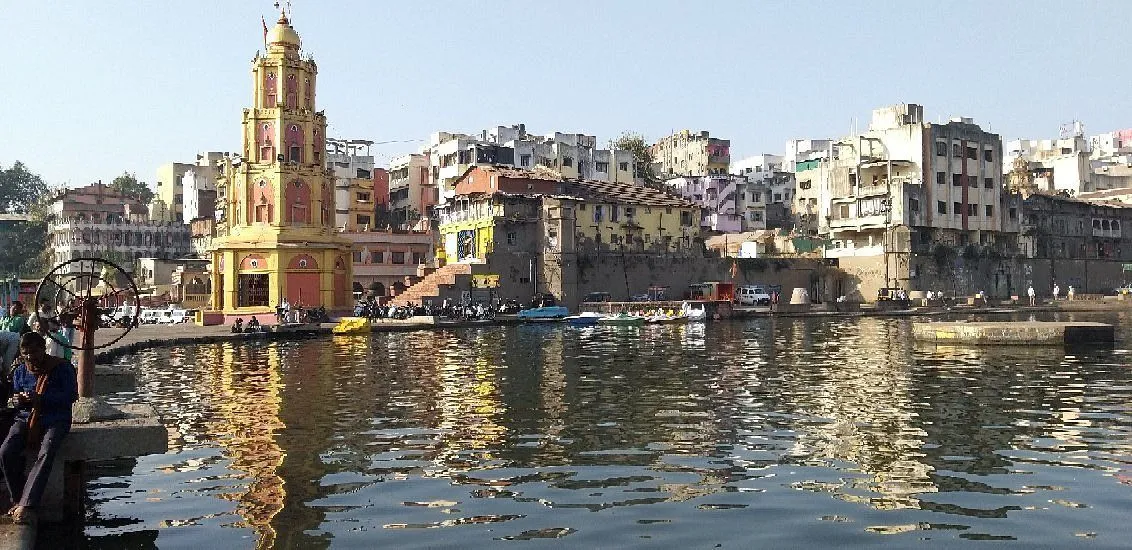
Ramkund is the main bathing ghat on the Godavari, where pilgrims gather for prayers and rituals. Morning is the best time for atmosphere, with priests, flowers and soft light on the water, and the ghats are also lively in the evening. Visitors can watch from the steps, and remove shoes before going near the water.
Kalaram Temple
Built in black stone in the 18th century, Kalaram Temple is the best-known shrine in Panchavati, dedicated to Rama. Its tall dark walls and calm courtyard are a good place to start the day, and the temple is especially busy on festival days.
Sita Gufa and the Panchavati Lanes
Sita Gufa is a small cave shrine where, tradition says, Sita stayed during the exile. The entrance is narrow, so the queue can move slowly. The lanes around it are lined with small shrines, shops and flower sellers, and are best explored on foot.
Muktidham and Tapovan
Muktidham is a white marble temple complex with replicas of the twelve Jyotirlingas and verses of the Bhagavad Gita on its walls. Tapovan, on the river downstream, is a quieter area tied in legend to the story of Lakshmana and Surpanakha, and is said to be the source of the city’s name.
Pandavleni Caves
About 8 km from the city, Pandavleni is a group of around two dozen Buddhist caves cut into a hillside between about the 1st century BCE and the 6th century CE. They include prayer halls and monastery cells, and the climb of steps rewards you with a wide view over the city and the plain. A good addition to the temple circuit.
Sula Vineyards and Nashik’s Wine Country
About 15 km from the city, Sula is the best-known winery in the region. Vineyard walks, tastings and terrace views are the main experiences, and the harvest and crush season, roughly February and March, is especially lively. Age rules apply to tastings, and it is wise to arrange the day so that you are not driving yourself after a tasting.
Trimbakeshwar Jyotirlinga
About 30 km west of Nashik, Trimbakeshwar is one of the twelve Jyotirlingas of Shiva and stands at the foot of Brahmagiri hill, near the source of the Godavari. The black-stone temple was rebuilt in the 18th century, and the Kushavarta Kund tank beside it is where the Kumbh bathing takes place. Queues can run to several hours on busy days, photography inside the sanctum is not allowed, and dress rules apply. Go early.
Anjaneri and the Coin Museum (Optional)
On the road towards Trimbakeshwar, Anjaneri hill is traditionally regarded as the birthplace of Hanuman, and a numismatics museum nearby displays coins and related collections. Both are optional stops for anyone with extra time.
Markets and Nashik Food
The old city bazaars are known for silverware and brassware, religious items and local snacks. Try misal pav, the spicy sprouted-bean curry that Nashik is famous for, and fresh grapes in season.
Simhastha Kumbh Mela in Nashik and Trimbakeshwar
Nashik and Trimbakeshwar host the Simhastha Kumbh Mela once every twelve years. The current Simhastha was formally opened on 31 October 2026 and runs until July 2028, with the main Amrit Snan bathing days announced for 2 August, 31 August and 11 to 12 September 2027. Dates can change, so please check official notices before you book. Expect very large crowds, traffic restrictions and strong demand for hotels around the bathing days, and book months ahead. Outside those days the city is easier to visit, though still busier than usual. Tell us your dates and we will plan around the Kumbh or for it.
Suggested 2-Day Nashik Plan
The timings below are standard timings, shown only to give an idea of how long each part of the day takes. You can start at a time of your choice, and the order may change with temple queues, the weather and, around the Kumbh, traffic arrangements.
Day 1: Panchavati, Caves and Vineyards
- Approx. 8:00 AM: Ramkund and the Godavari ghats, about 1 hour.
- Approx. 9:15 AM: Kalaram Temple and Sita Gufa, about 1.5 hours.
- Approx. 11:00 AM: Muktidham, about 45 minutes.
- Approx. 12:30 PM: Lunch, with misal pav if you like it.
- Approx. 2:00 PM: Pandavleni Caves, about 1.5 hours.
- Approx. 4:00 PM: Sula Vineyards for a tour and tasting, about 2 hours.
- Evening: Return to your hotel, or walk through the old bazaars if time allows.
Day 2: Trimbakeshwar
- Approx. 6:30 AM: Leave Nashik for Trimbakeshwar, about 45 to 60 minutes.
- Approx. 7:30 AM: Temple darshan. Allow 1 to 3 hours depending on the queue.
- Approx. 10:30 AM: Kushavarta Kund and the lanes around the temple.
- Approx. 12:00 PM: Lunch, with an optional walk at Brahmagiri base.
- Approx. 2:00 PM: Anjaneri or the Coin Museum on the way back, if you wish.
- Approx. 4:00 PM: Return to Nashik, or continue to Shirdi, about 2 hours further.
If you only have one day: choose either the city and Pandavleni, ending with Sula, or Trimbakeshwar with the Godavari ghats on the way back. Doing both in a day means long queues and a rushed afternoon.
How to Reach Nashik
- By road from Mumbai and Pune: About 170 to 180 km from Mumbai, usually 3.5 to 4 hours, and about 210 km from Pune, usually 4 to 5 hours. Nashik is also about 90 km from Shirdi, usually 2 hours.
- By air: Nashik’s airport at Ozar is about 20 km from the city. It is being expanded, and flight schedules change, so check current services.
- By rail: Nashik Road railway station is on the main Mumbai line, with frequent trains from Mumbai and onward connections.
- In and around Nashik: Your private car and driver cover the city, the caves, the vineyards and Trimbakeshwar. Around the Kumbh bathing days, some roads and parking may be restricted, so we plan access in advance.
Where to Stay in Nashik
Nashik has hotels in every category, from simple pilgrim lodges near the river to comfortable business hotels in the city and resort-style stays on the vineyard roads. A night in Nashik lets you start Trimbakeshwar early and avoid the longest queues. Rooms fill quickly around festivals, long weekends and above all the Kumbh bathing days, so book as far ahead as you can. Tell us your dates and the style of stay you prefer, and we will suggest places to match.
Best Time to Visit Nashik
Nashik can be visited all year, and the weather shapes the experience.
- October to February: Comfortable days and cool evenings, the best season for temples, caves and vineyards. The grape harvest begins in February.
- March to May: Hot, with high daytime temperatures. Plan outdoor sights for early morning, and carry water.
- June to September: The monsoon turns the hills green and fills the waterfalls and the Godavari. Rain can be heavy, but crowds are lighter, except around the Kumbh bathing days in August and September 2027.
Travel Tips for Nashik
- Start early at the temples: Queues at Trimbakeshwar and Sita Gufa are shortest in the morning.
- Dress modestly: Cover shoulders and knees, and be ready to remove shoes. Some temples have specific dress rules.
- Travel light into the sanctum: Phones, cameras and bags may not be allowed inside Trimbakeshwar, so check the current rules.
- Plan wine tastings sensibly: Arrange your day so that your driver, not you, handles the road after a tasting, and expect age checks.
- Carry some cash: Temple offerings, small shops and ghat services are easier to pay for in cash.
- Book well ahead around the Kumbh: Hotels, transport and temple access fill early and prices rise sharply.
Nearby Places to Combine with Nashik
Nashik sits comfortably on the main routes of Maharashtra. Combine it with Shirdi for the Sai Baba temple, Aurangabad, Ajanta and Ellora for the great cave temples, Mumbai for the harbour city and Pune for forts and palaces.
Maharashtra tours that include Nashik:
- Best of Maharashtra tour (11 nights / 12 days)
- Maharashtra caves and temple tour (13 nights / 14 days)
Plan Your Nashik Visit
Tell us your dates, how many of you are travelling and whether you would like to include Trimbakeshwar, the vineyards or the Kumbh. We will plan around the temple queues and the crowds and suggest a stay that suits you, with a private car and driver from Mumbai, Pune or Shirdi.
Plan My Nashik Trip →Why Plan Nashik with Us
- Queue-aware planning: We put Trimbakeshwar early in the day and keep the city for later, so you spend less time waiting.
- Kumbh-ready: We plan around the bathing days and the road restrictions, whether you want to avoid the crowds or be part of them.
- Flexible timing: You choose your start time, and we adapt to the weather and the temple rules.
- Easy to combine: Add Shirdi and Ajanta and Ellora for a wider Maharashtra journey, or see our private chauffeur service in India.
Frequently Asked Questions
How many days do I need in Nashik?
Two days cover Panchavati, Pandavleni Caves, Sula Vineyards and Trimbakeshwar without rushing. A single day means choosing between the city and Trimbakeshwar.
Is it Nasik or Nashik?
Both spellings are used. Nashik is the standard modern spelling, and Nasik is the older form that is still common in travel and on road signs.
How far is Trimbakeshwar from Nashik?
About 30 km, usually 45 to 60 minutes by road. Allow extra time for the queue at the temple.
When is the Nashik Kumbh Mela?
The Simhastha Kumbh Mela opened on 31 October 2026 and runs until July 2028. The main bathing days announced for 2027 are 2 August, 31 August and 11 to 12 September. Check official notices before booking, as dates can change.
Can I visit Nashik during the Kumbh?
Yes, but plan ahead. Crowds, road restrictions and hotel demand rise sharply around the bathing days. We can plan your trip to avoid them or to be there.
Can I do a wine tasting at Sula?
Yes. Tastings and vineyard tours are available, with age rules, and we recommend letting your driver take care of the road afterwards.
What is the best time to visit Nashik?
October to February for comfortable weather. Summers are hot, and the monsoon is green and wet.
Can I combine Nashik with Shirdi and Aurangabad?
Yes. Shirdi is about two hours from Nashik, and Aurangabad is about four. See our Best of Maharashtra tour and our Maharashtra caves and temple tour.
Explore More Places in Maharashtra
Continue your Maharashtra journey with more places to explore. After Nashik, visit the temple town of Shirdi, the cave temples of Ajanta and Ellora, the harbour city of Mumbai or the forts and palaces of Pune, or see our tours that link them together.