

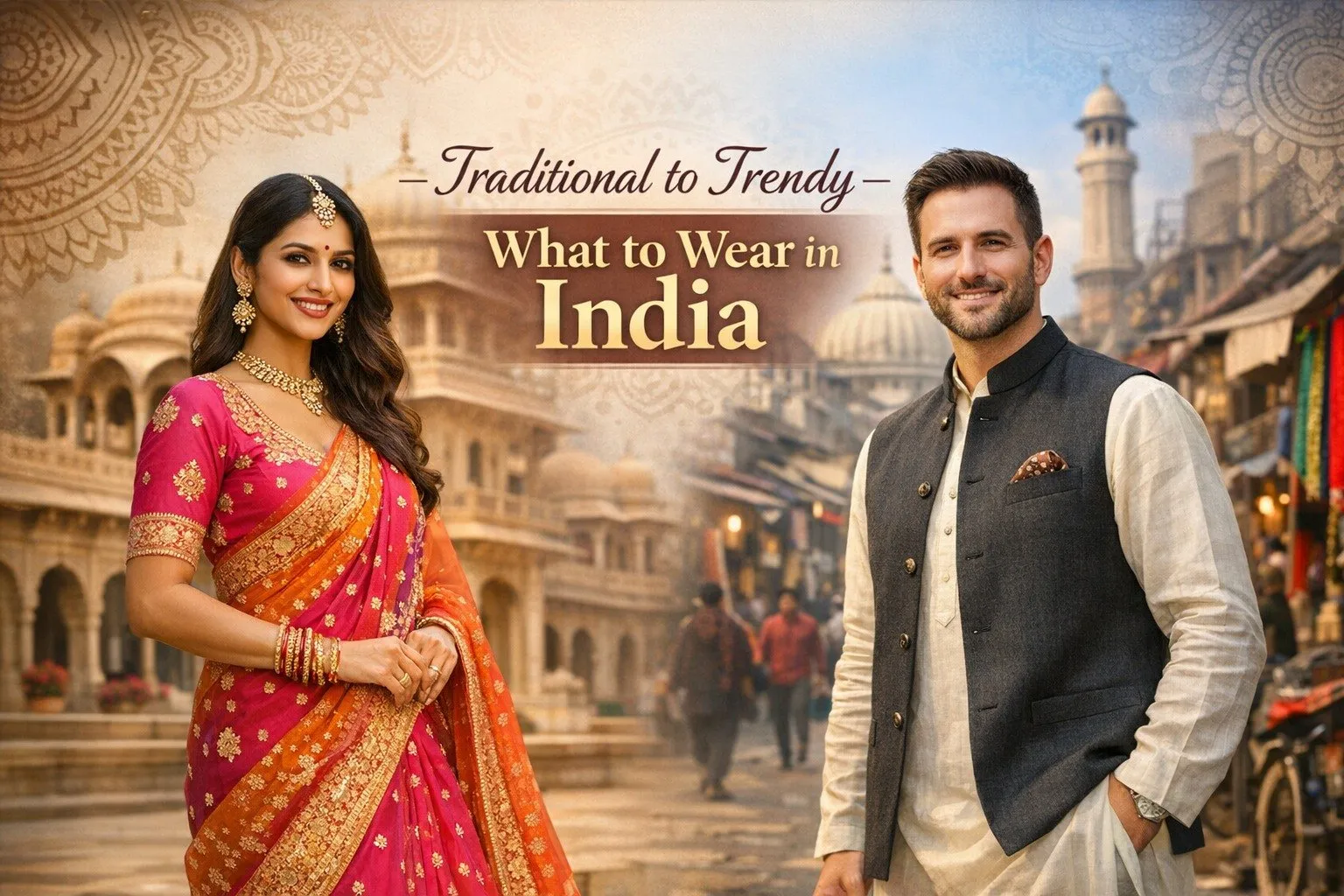
Clothing Guide – What to Wear While Traveling in India
India’s climate, geography, and cultural traditions vary dramatically from region to region. From tropical beaches to Himalayan mountains and conservative rural villages to cosmopolitan metros, dressing appropriately ensures both comfort and cultural respect. This guide covers year-round essentials, seasonal variations, and special cultural considerations.
What to Wear While Traveling
- Clothing for Hot & Humid Regions:
- Lightweight cotton or linen clothing
- Loose-fitting tops, dresses, or shirts
- Breathable trousers or skirts
- Sandals or ventilated shoes
- Wide-brim hat and sunglasses
- Avoid tight synthetic fabrics
- Dressing for Cold Weather & Hill Stations:
- Warm jackets (down or insulated)
- Thermal base layers
- Wool sweaters
- Scarf, gloves, and beanie
- Warm socks
- Layering for changing temperatures
- Modest Clothing Guidelines (Temples & Rural Areas):
- Cover shoulders and knees
- Avoid very short shorts or low-cut tops
- Loose clothing preferred
- Women: carry a scarf or shawl
- Men: avoid sleeveless shirts
- Especially important in Varanasi, Rishikesh, and pilgrimage towns
- Footwear for Sightseeing:
- Comfortable walking shoes or sneakers
- Supportive sandals
- Closed shoes for trekking or wildlife safaris
- Slip-on shoes for temples
Seasonal Clothing Guide
- Summer (March–June):
- Light-colored cotton clothing
- Loose silhouettes
- Wide-brim hat or cap
- Sunglasses
- High-SPF sunscreen
- Stay hydrated; avoid dark fabrics
- Monsoon (June–September):
- Quick-dry clothing
- Lightweight rain jacket or poncho
- Waterproof footwear
- Compact umbrella
- Avoid long hemlines that drag in muddy streets
- Winter (November–February):
- Warm jackets
- Wool sweaters
- Gloves and scarves
- Layered clothing
- Southern India: light layer for cool evenings
Special Occasions & Cultural Settings
- Visiting Religious Sites:
- Cover arms and legs
- Remove footwear
- Head covering if required (e.g., Golden Temple)
- Avoid leather items in certain temples
- Attending Family Visits:
- Dress modestly
- Avoid revealing or overly casual outfits
- Bright but tasteful attire is appreciated
- Festivals & Weddings:
- Women: saree, salwar kameez, or lehenga
- Men: kurta-pajama or smart casual/semi-formal attire
- Bright colors encouraged
- City vs. Rural Dress:
- Urban metros: Mumbai, Bangalore, New Delhi – Western clothing is accepted
- Rural/tribal regions: dress conservatively, avoid flashy clothing, prefer neutral tones
- Wildlife & Trekking Activities:
- Layered, breathable clothing
- Sturdy closed shoes
- Neutral colors to avoid disturbing wildlife
- Carry hat, sunscreen, and lightweight jacket
Smart Year-Round Packing Checklist
- 3–5 breathable tops
- 2–3 comfortable bottoms
- 1 modest outfit for temples
- 1 light jacket or sweater
- 1 warm layer (season dependent)
- Scarf or shawl
- Walking shoes
- Sandals
- Rain layer (if traveling during monsoon)
Final Advice
- Rule of Thumb: Breathable + Comfortable + Slightly Conservative
- Respect regional cultures and dress modestly outside metros
- Layer clothing to adjust to varying climates
- Use scarves, hats, and accessories for flexibility in religious or sunny areas
Frequently Asked Questions
1️⃣ What type of clothing is best for traveling in India?
Lightweight, breathable fabrics like cotton and linen are ideal for most regions. For northern areas during winter, layering with sweaters and light jackets is recommended.
2️⃣ Is there a dress code for visiting temples in India?
Yes. Modest clothing is required in most temples. Shoulders and knees should be covered, and footwear must be removed before entering religious sites in cities such as Varanasi and Madurai.
3️⃣ What should I wear during summer in India?
Summer (March–June) can be extremely hot. Pack loose cotton clothing, sunglasses, sunscreen, and a hat. Avoid heavy synthetic fabrics that trap heat.
4️⃣ What kind of shoes should I bring to India?
Comfortable walking shoes or breathable sneakers are best for sightseeing. Slip-on footwear is practical for temple visits, where shoes must be removed.
5️⃣ How cold does North India get in winter?
Winter temperatures in northern cities like Delhi and regions such as Rajasthan can drop significantly in the evenings. Warm layers, scarves, and closed shoes are essential from November to February.
6️⃣ What should I wear during monsoon season in India?
Quick-dry clothing, waterproof footwear, and a light rain jacket are recommended. An umbrella and extra socks can also be helpful, especially in coastal and southern regions like Kerala.
🗺️ Destination-Specific Guides
Explore detailed travel guides for every region: