

Bhavnagar Sightseeing Guide
Royal Palaces, Blackbuck Grasslands & the Gulf of Khambhat
Explore Saurashtra's Royal Port City
Bhavnagar sits on the Gulf of Khambhat in Saurashtra, Gujarat, and was the capital of a princely state from the early 18th century. Its palaces, hilltop temple, old bazaars and lakes reflect that royal past, while a short drive away the Velavadar grasslands shelter one of the largest herds of blackbuck antelope in India. It is a quieter, less visited side of Gujarat, and a good base for the Jain temples of Palitana.
This guide covers the main sights, a 2-day plan, how to reach Bhavnagar, where to stay and the practical details on Velavadar's closed season and the Gulf's very large tides. Most travellers stay one or two nights, with the city on one day and Velavadar on the other.
Plan Your Bhavnagar Trip →
Bhavnagar at a Glance
- Location: Saurashtra, on the Gulf of Khambhat, Gujarat
- Known for: Nilambag Palace, Takhteshwar Temple, Velavadar blackbuck and old bazaars
- Wildlife: Velavadar Blackbuck National Park, roughly 45 to 65 km away
- Local flavour: Bhavnagari gathiya, a famous crisp savoury snack
- Best for: Heritage, wildlife, photography and quiet Gujarat travel
- Suggested stay: 2 nights (1 night minimum)
- Best time: October to March
- Getting around: Private car, on foot in the old city
How Bhavnagar Is Laid Out
Plan Bhavnagar in three parts. The city holds Takhteshwar Temple, Nilambag Palace, the museums, Gaurishankar Lake and the old bazaars, all within a short drive of each other. The Gulf coast to the south and east holds Ghogha Beach and Koliyak, with its sea temple. Velavadar, roughly 45 to 65 km to the north, needs its own half day, and Palitana, about 50 km south-west, needs another. Grouping the days this way avoids long drives with short stops.
Takhteshwar Temple
Takhteshwar Temple is a Shiva temple on a hill in the middle of the city, built in the late 19th century by Maharaja Takhtsinhji. A flight of steps leads to a marble temple, and from the platform you can look out over the rooftops towards the Gulf of Khambhat. Go in the morning or at sunset, when the light is soft and the air is cooler. Remove footwear and dress modestly.
Nilambag Palace and the Barton Museum
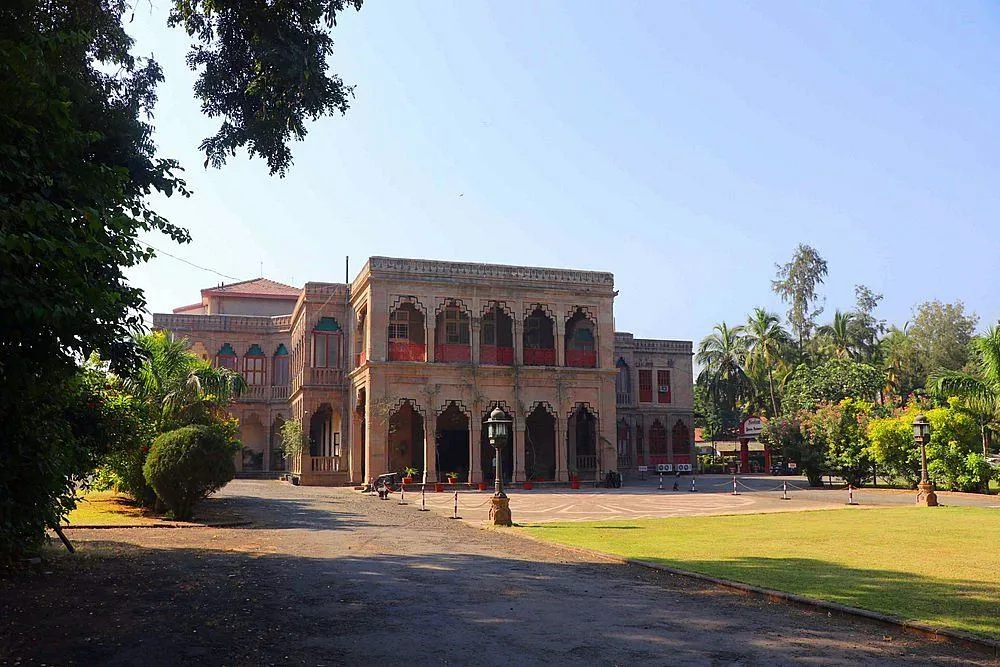
Nilambag Palace was built in 1859 in an Indo-European style, with wide verandahs, domes and landscaped gardens, and it is now a heritage hotel as well as one of the city's landmarks. The Barton Museum nearby holds artefacts from Bhavnagar's princely past, including weapons, textiles, coins and royal objects. Check opening days locally before you go, as the museum and the palace's visiting rules can change.
Gandhi Smriti and the Old City
Mahatma Gandhi studied at Samaldas College in Bhavnagar in 1888, and Gandhi Smriti is a small museum that records his connection with the city. From there, the old city's lanes of weathered havelis, shops and temples lead towards Raja Bazaar, a busy market for textiles, handicrafts and snacks. Try Bhavnagari gathiya, the crisp gram-flour snack the city is known for, at one of the local shops.
Gaurishankar Lake
Gaurishankar Lake, also known as Bor Talav, was built in the 19th century as a reservoir for the city and is now a calm green spot with a promenade, birds and local families. It makes a gentle break in the afternoon between the old city and the coast.
Ghogha Beach and the Gulf of Khambhat
Ghogha is an old port town about 20 km from Bhavnagar, with a quiet beach, fishing boats and sunset views over the Gulf. The Gulf of Khambhat has some of the largest tides in India, and the shore can turn to wide mudflats at low tide, so this is a place for walking and photography rather than swimming. Check tide times before you go.
Nishkalank Mahadev Temple, Koliyak
Roughly 20 km from the city at Koliyak, this Shiva temple stands in the sea and can be reached on foot across the seabed only at low tide, when the water draws back. At high tide only the temple flags are visible. Always check the tide timetable locally, follow the marked path, and leave in good time before the water returns, as the tide comes in quickly.
Velavadar Blackbuck National Park
Velavadar protects a flat tropical grassland that was once the hunting ground of Bhavnagar's rulers, and it now holds thousands of blackbuck, along with wolves, jackals, nilgai and many birds. In winter the park hosts one of the world's largest roosts of harriers. Safaris run in the early morning and late afternoon with a Forest Department guide, and visitors must stay in the vehicle. The park is closed from 16 June to 15 October each year, and sightings are never guaranteed.
Suggested 2-Day Plan for Bhavnagar
Day 1: City and Coast
- 8:30 AM: Takhteshwar Temple and its hilltop views
- 9:30 AM: Nilambag Palace and the Barton Museum
- 11:30 AM: Gandhi Smriti and a walk through the old city to Raja Bazaar
- 1:00 PM: Lunch, with Bhavnagari gathiya as a snack
- 3:00 PM: Gaurishankar Lake
- 4:30 PM: Drive to Ghogha Beach for the evening light, mindful of the tide
Day 2: Velavadar and Koliyak
- 6:00 AM: Drive to Velavadar, about 1 to 1.5 hours (October to mid-June only)
- 7:00 AM: Morning safari among the blackbuck and grassland birds
- 10:30 AM: Breakfast near the park, then return to Bhavnagar
- 1:00 PM: Lunch in the city
- 3:00 PM: Nishkalank Mahadev Temple at Koliyak, timed to low tide
Third day? Add Palitana and the Shatrunjaya hill temples. Only one day? Choose either the city (Day 1) or Velavadar (Day 2). Combining both means well over 100 km of driving and rushed stops at each.
How to Reach Bhavnagar
- By road: Ahmedabad is roughly 175 km away, about 3.5 to 4 hours, and Palitana about 50 km. A private car with driver is the easiest way to link Bhavnagar with Gir, Somnath and the coast.
- By rail: Bhavnagar Terminus has trains from Ahmedabad, Mumbai and other cities. Check current schedules.
- By air: Bhavnagar Airport is close to the city with limited flights. Ahmedabad is the larger gateway, followed by a road transfer.
Where to Stay in Bhavnagar
- Heritage hotel: Nilambag Palace offers a stay in the former royal residence, and is the most atmospheric option in the city.
- City hotels: A range of mid-range and business hotels close to the old city and the station.
- Velavadar lodges: Lodges and camps beside the park suit travellers who want an early safari without the drive.
Best Time to Visit Bhavnagar
October to March is the best time, with pleasant weather for sightseeing and the safari. Winter is also the time to see harriers at Velavadar. April to June is very hot. The monsoon, from June to September, brings humid weather, and Velavadar is closed from 16 June to 15 October each year, so plan the wildlife day outside those dates.
Travel Tips for Bhavnagar
- Remember that Velavadar is closed from 16 June to 15 October each year.
- Book Velavadar safaris and lodges early in the winter season.
- Stay in the vehicle on safari, with the Forest Department guide.
- Check tide timings before visiting Koliyak or Ghogha, and never cross the seabed on an incoming tide.
- Do not plan to swim at Ghogha, as the tides and mudflats make it unsuitable.
- Dress modestly at temples and remove footwear where asked.
- Check museum and palace opening days locally.
- Carry water, sun protection and some cash.
Nearby Places to Combine with Bhavnagar
Bhavnagar sits on a natural Saurashtra route. Palitana, about 50 km away, has the Shatrunjaya hill temples, which need a long morning for the climb. Continue to Gir National Park for lions and Somnath for the coastal temple, or head back to Ahmedabad. For ready-made routes, see our Gujarat tour packages, or arrange a private chauffeur for the road legs.
Plan Your Bhavnagar Visit with Us
Tell us your dates and pace, and we will shape a suggested plan around your interests. It can include a heritage stay at Nilambag Palace or a Velavadar lodge, a private air-conditioned car with driver, a Velavadar safari timed to the season, and Koliyak visits planned around the tide.
Plan Your Bhavnagar Visit →Why Plan Bhavnagar with Us
- Itineraries are suggested routes that we tailor to your dates, interests and pace.
- Days are grouped by area and timed around the safari season and the tide.
- Local drivers who know the coast and the roads to Velavadar and Palitana.
- Bhavnagar combines easily with Palitana, Gir, Somnath and Ahmedabad.
Frequently Asked Questions
How many days do you need in Bhavnagar?
Two days cover the city and coast on one day and Velavadar on the other. One day covers either the city or Velavadar, but not both comfortably.
When is Velavadar National Park open?
The park is closed from 16 June to 15 October each year and open for the rest of the year, with safari sessions in the morning and afternoon. Check current timings before you plan.
Can I visit Velavadar and the city in one day?
It is possible but rushed, as Velavadar is roughly 45 to 65 km from the city and safaris run in set sessions. Splitting them across two days works much better.
Can I visit the temple in the sea at Koliyak any time?
No. You can only walk across at low tide, so the visit is planned around the tide timetable.
Can the plan be changed?
Yes. The plan above is a suggested route, and we can adjust it to your interests, the season and the tide.
Is Bhavnagar suitable for families?
Yes. The temple, museums, lake and safari suit most ages, though the safari starts early and the sea temple needs care with children around the tide.