

Pune Sightseeing Tour
Shaniwar Wada, Sinhagad and Aga Khan Palace Guide
Maratha Forts, Cave Temples, Old Bazaars and a 2-Day Plan in Maharashtra’s Cultural Capital
Pune, about 150 km from Mumbai, is often described as the cultural heart of Maharashtra. It was the seat of the Peshwas, the Maratha prime ministers who ruled much of India in the 18th century, and the old city still holds their palace, temples and bazaars. Elsewhere in Pune you find an 8th-century cave temple, the palace where Mahatma Gandhi was interned, a famous museum of Indian craft and a hill fort that looks over the Sahyadri. The city is also a university town, with relaxed cafés, bakeries and street food on almost every corner.
This guide covers what to see, how to plan two days, how to reach Pune, where to stay and when to go. Most travellers stay one or two nights, often as part of a longer Maharashtra tour, and Pune pairs easily with Mumbai, Lonavala and Mahabaleshwar.
Plan Your Pune Visit →
Pune at a Glance
- Destination: Pune, Maharashtra
- Known for: Shaniwar Wada, Aga Khan Palace, Dagdusheth Ganpati, Sinhagad Fort, Pataleshwar Caves and Koregaon Park
- Distance from Mumbai: About 150 km, usually 3 to 4 hours on the Expressway
- Distance to nearby hills: Lonavala about 65 km, Mahabaleshwar about 120 km
- Suggested time: Two days, or one night for the main sights
- Best for: History lovers, culture seekers, families, students and food lovers
- Best time: October to February for comfortable weather
- Entry fees: Forts, museums and palaces charge entry fees, and rates for Indian and foreign visitors differ. These change, so check current prices locally
Top Things to See and Do in Pune
Pune’s sights fall into three groups: the old city around Shaniwar Wada, the east side with the Aga Khan Palace and Koregaon Park, and the hills outside town. Traffic is heavy at peak hours, so grouping the stops by area saves a lot of time.
Shaniwar Wada
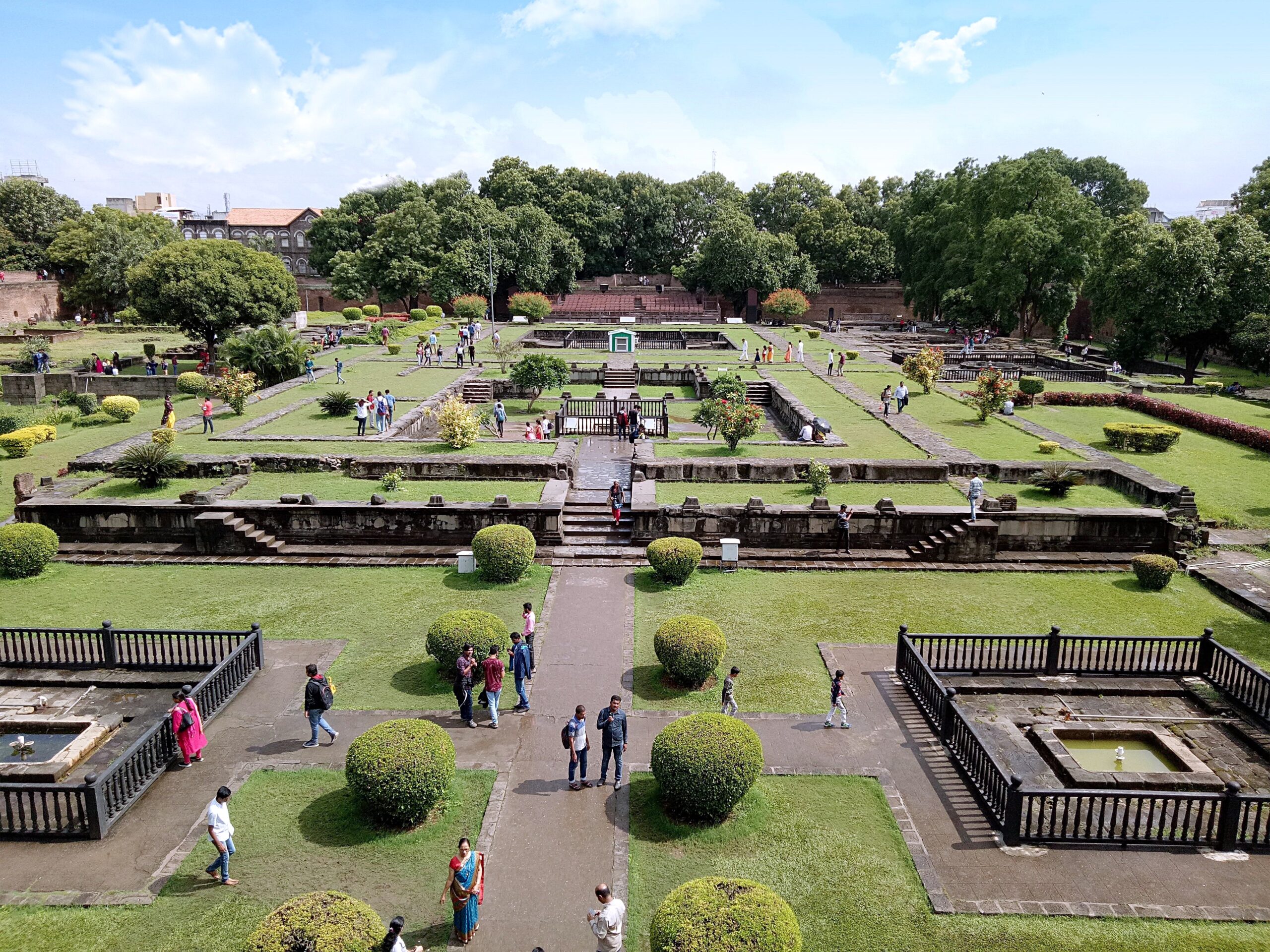
Built in 1732 as the seat of the Peshwas, Shaniwar Wada was once a grand seven-storey palace-fort. A fire in 1828 destroyed most of the interior, and what remains today are the massive walls, gateways, fountains and foundations. A sound and light show is held in the evenings, with timings that vary. Go in the morning for the quietest visit.
Dagdusheth Halwai Ganpati Temple
One of the best-known Ganesh temples in Maharashtra, Dagdusheth was founded in the late 19th century by a local sweet-maker. The richly decorated idol draws a steady stream of devotees, and queues can be long on Tuesdays, festival days and during Ganesh Chaturthi. Go early, dress modestly and remove shoes before entering.
Raja Dinkar Kelkar Museum
A private collection of Indian craft and everyday objects, donated to the state, the museum displays carved doors, musical instruments, lamps, weapons, textiles and household items from across the country. It is a good wet-weather stop and gives a human scale to the history you see elsewhere.
Aga Khan Palace
This arched palace on the east side of the city was built in 1892. During the Quit India movement, Mahatma Gandhi, Kasturba Gandhi and others were interned here, and Kasturba died in the palace in 1944. Memorials and a museum recall that period, and the lawns around the palace make for a calm, reflective visit.
Pataleshwar Cave Temple
This 8th-century rock-cut Shiva temple sits below street level in the middle of the modern city, with a round Nandi pavilion in front. It is small, quiet and free of crowds, and a pleasant contrast to the busier temples elsewhere in Pune.
Sinhagad Fort
About 30 km from Pune, Sinhagad is a Maratha hill fort on a steep ridge, famous for the 1670 battle in which Tanaji Malusare took the fort for Shivaji. Visitors can drive most of the way up and then climb a short, steep stretch of steps. The views over the Sahyadri and the plain are the best reward, and in the monsoon the ridge is green and misty. Early morning is best, and it is crowded on weekends.
Parvati Hill
A short climb of steps leads to a group of 18th-century Peshwa-era temples on a hill south of the old city. The top gives a wide view over Pune, and it is a popular spot for morning walks and sunset.
Koregaon Park and Osho Meditation Resort
Koregaon Park is a leafy neighbourhood of cafés, bakeries and boutiques, and is home to the Osho meditation resort. Entry to the resort itself is by registration, so we advise beforehand whether a visit is possible. The streets around it are pleasant for an evening walk and a coffee.
Markets and Pune Food
Tulsi Baug and Laxmi Road are Pune’s traditional bazaars, good for saris, brassware, books and festival goods. Try misal pav, bakarwadi, a thick Mastani milkshake and Irani café classics such as bun maska and Shrewsbury biscuits.
Suggested 2-Day Pune Plan
The timings below are standard timings, shown only to give an idea of how long each part of the day takes. You can start at a time of your choice, and the order may change with traffic, opening hours and the weather. Please check opening days when you plan, as they can change.
Day 1: Old Pune, Museums and Palaces
- Approx. 9:00 AM: Shaniwar Wada, about 1 to 1.5 hours.
- Approx. 10:45 AM: Dagdusheth Ganpati Temple, about 45 minutes, longer if queues are heavy.
- Approx. 12:00 PM: Raja Dinkar Kelkar Museum, about 1 hour.
- Approx. 1:15 PM: Lunch with local Maharashtrian dishes.
- Approx. 2:45 PM: Aga Khan Palace, about 1.5 hours.
- Approx. 4:45 PM: Pataleshwar Cave Temple, about 30 to 45 minutes.
- Evening: Coffee and a stroll in Koregaon Park.
Day 2: Sinhagad, Parvati Hill and the Bazaars
- Approx. 7:00 AM: Drive to Sinhagad Fort, about 1 hour.
- Approx. 8:00 AM: Explore the fort and the views, about 2 to 3 hours.
- Approx. 11:30 AM: Return to the city.
- Approx. 1:00 PM: Lunch.
- Approx. 2:30 PM: Parvati Hill temples and view, about 1.5 hours.
- Approx. 4:15 PM: Tulsi Baug and Laxmi Road for shopping and snacks.
- Evening: Free time, or continue towards Lonavala or Mahabaleshwar.
If you only have one day: choose Shaniwar Wada, Dagdusheth, Aga Khan Palace and Pataleshwar, and leave Sinhagad for another visit. If you love forts, swap the museum for the early drive to Sinhagad.
How to Reach Pune
- By air: Pune Airport has flights from Delhi, Mumbai, Bengaluru and many other cities. Flight schedules change, so check current services.
- By rail: Pune Junction is on the main line from Mumbai, with frequent trains taking roughly three to four hours.
- By road: About 150 km from Mumbai on the Expressway, usually 3 to 4 hours depending on traffic. Lonavala is about 65 km, Mahabaleshwar about 120 km, Nashik about 210 km and Aurangabad about 235 km.
- In the city: Your private car and driver cover all the stops. Traffic can be heavy in the morning and evening, so we plan routes around the peaks.
Where to Stay in Pune
Pune has hotels in every category, from business hotels and serviced apartments to boutique stays and resorts. Koregaon Park and the area around the old city are the most convenient bases, and staying one or two nights lets you start Sinhagad early. Rooms fill quickly around conferences, weekends and festivals, especially Ganesh Chaturthi, so book early. Tell us your dates and the style of stay you prefer, and we will suggest places to match.
Best Time to Visit Pune
Pune can be visited all year, and the season changes the feel of the city.
- October to February: Warm days and cool mornings and evenings, the most comfortable time for forts, temples and walking. The busiest season.
- March to May: Hot, with very high daytime temperatures. Plan outdoor sights for early morning and keep the afternoon for museums and cafés.
- June to September: The monsoon turns the hills green and brings mist to Sinhagad, though rain can be heavy and roads slow. Ganesh Chaturthi usually falls in August or September, and is a spectacular but very crowded time, with road closures in the old city and large processions.
Travel Tips for Pune
- Group the sights by area: The old city, the east side and Sinhagad lie in different directions, so grouping saves a lot of traffic time.
- Start early for Sinhagad: Mornings are cooler and quieter, and weekends are crowded.
- Dress modestly at temples: Cover shoulders and knees, and be ready to remove shoes.
- Wear comfortable shoes: You will walk on uneven stone at Shaniwar Wada and climb steps at Sinhagad and Parvati.
- Check opening days: Museums and monuments can change their hours or close on certain days, so we confirm them when we plan your dates.
- Carry some cash: Entry fees, small shops and snack stalls are easier to pay for in cash.
- Plan around Ganesh Chaturthi: Roads in the old city close, and hotels fill. Book early if you want to be there, or avoid those days if you do not.
Nearby Places to Combine with Pune
Pune sits at the centre of western Maharashtra, so it links easily with other routes. Combine it with Mumbai for the harbour city, Lonavala, Khandala and Matheran for caves and car-free lanes, Mahabaleshwar for viewpoints and strawberries, Nashik for the Godavari ghats and vineyards, Shirdi for the Sai Baba temple and Aurangabad for Ajanta and Ellora.
Maharashtra tours that include Pune:
- Best of Maharashtra tour (11 nights / 12 days)
- Maharashtra caves and temple tour (13 nights / 14 days)
Plan Your Pune Visit
Tell us your dates, how many of you are travelling and whether you would like one day or two. We will plan around the traffic and the festival calendar and suggest a stay that suits you, with a private car and driver for the city and Sinhagad.
Plan My Pune Trip →Why Plan Pune with Us
- Routes that respect the traffic: We group the sights by area and time them around the morning and evening peaks.
- Heritage with context: We balance forts, palaces, temples and museums so the days feel varied, not repetitive.
- Flexible timing: You choose your start time, and we adapt to the weather, the crowds and opening hours.
- Easy to combine: Add Mumbai, Lonavala and Mahabaleshwar for a wider Maharashtra journey, or see our private chauffeur service in India.
Frequently Asked Questions
How many days do I need in Pune?
Two days cover the old city, Aga Khan Palace, Pataleshwar and Sinhagad without rushing. One day is enough for the main city sights.
How far is Pune from Mumbai?
About 150 km, which usually takes 3 to 4 hours by road and about the same by train.
Is Sinhagad Fort worth visiting?
Yes, especially for the views and the Maratha history. It is about 30 km from the city, and the last stretch involves a short, steep climb. Go early.
Can I visit the Osho meditation resort?
Entry is by registration, so a casual visit is not always possible. We advise on this beforehand, and Koregaon Park is pleasant to walk through regardless.
What is Pune famous for?
Peshwa history, Shaniwar Wada, Ganesh Chaturthi, universities, bakeries, misal pav and a relaxed café culture.
What is the best time to visit Pune?
October to February for comfortable weather. Summers are hot, and the monsoon is green and wet.
Is Pune suitable for families and older travellers?
Yes. Most sights are accessible by car and involve gentle walking. Sinhagad and Parvati Hill involve steps, which can be taken slowly or skipped.
Can I combine Pune with Mumbai, Lonavala and Mahabaleshwar?
Yes. See our Best of Maharashtra tour and our Maharashtra caves and temple tour.
Explore More Places in Maharashtra
Continue your Maharashtra journey with more places to explore. After Pune, discover the harbour city of Mumbai, the hill stations of Lonavala and Mahabaleshwar, the Godavari ghats of Nashik or the cave temples of Ajanta and Ellora, or see our tours that link them together.