

Nagarhole Wildlife Safari Guide
Kabini Boat & Jeep Safaris, Elephants and Tigers in Karnataka
Plan Your Safari on the Kabini Backwaters and in the Forests of Nagarhole
Nagarhole National Park, officially Rajiv Gandhi National Park, lies in southern Karnataka, about 80 to 95 km from Mysore. Its name means snake river in Kannada, and its teak and bamboo forest, grassland and winding streams are part of the Nilgiri Biosphere Reserve. On the southern edge, the Kabini River has been dammed to form a long reservoir whose backwaters separate Nagarhole from neighbouring Bandipur, and that is where most travellers base themselves.
Kabini is best known for large herds of elephants that gather on the shore in the dry months, and for the chance to watch wildlife from a boat as well as a jeep. This guide focuses on the safari itself: how Kabini and the rest of the park fit together, how jeep and boat safaris work, how to book, the rules, a 3-day plan, how to reach Nagarhole, where to stay and the best time to go. For ready-made routes, see our wildlife tour packages. Sightings are never guaranteed.
Plan Your Nagarhole Safari →
Nagarhole at a Glance
- Location: Southern Karnataka, near the Kerala and Tamil Nadu borders
- Known for: Elephant herds, tigers, leopards, gaur and Kabini boat safaris
- Landscape: Teak and bamboo forest, grassland and the Kabini backwaters
- Safari styles: Jeep or canter safaris in the forest, and boat safaris on the reservoir
- Season note: Operations can be reduced in heavy monsoon rain
- Suggested stay: 2 to 3 nights, with 3 to 4 safaris
- Best time: October to May, with February to May best for elephants
- Distance from Mysore: Roughly 80 to 95 km, about 2 to 2.5 hours
Kabini and the Rest of Nagarhole
It helps to know the layout when you plan. Kabini, on the southern edge, is the most popular base, with lodges along the reservoir, boat safaris and open shores where elephants gather. Other parts of the park are reached from different entry points, including gates on the Hunsur side and on the Kodagu side towards Coorg, with forest-department safaris and fewer visitors. Most travellers stay at Kabini for the combination of land and water safaris. Gates, zones and operators can change, so confirm them at booking.
How Jeep and Boat Safaris Work
Forest safaris run in the early morning and late afternoon, usually in open jeeps or shared canters, with a trained guide on board and timings that change by season. Each lasts roughly two to three hours along set forest tracks and shoreline roads. Boat safaris run on the Kabini backwaters, usually for an hour or more, and offer close views of elephants, crocodiles and birds along the shore from a low, quiet vantage point. Both are managed by lodges and the Forest Department. Expect an early start for the morning drive, and check the current schedule before you plan.
Booking Safaris
Safari and boat seats are limited per slot and sell out at weekends, on holidays and in the dry season from February to May. Bookings are usually made through your lodge or the Karnataka Forest Department, and each guest should carry photo identification. Camera fees may apply, and prices differ between operators. We help plan and book safaris subject to availability, so share your dates early and keep your plans flexible.
Safari Rules and Etiquette
- Stay seated in the vehicle or boat at all times, and never get out or stand up unless the guide says it is safe.
- Wear the life jacket on boat safaris, and keep your hands inside the boat.
- Keep your voice low, and do not shout, play music or make sudden movements near animals.
- Never feed, call or approach wildlife, and do not use flash.
- Do not use drones, litter, smoke or carry plastic into the park.
- Wear muted colours, and avoid strong perfumes.
- Keep a safe distance from elephants, and follow your guide's directions at a sighting.
Elephants of the Kabini Backwaters
Kabini's reputation rests on its elephants. In the dry season, from about February to May, the reservoir recedes and leaves wide grassy flats along the shore, which draw large herds from the surrounding forest to graze and drink. Watching dozens of elephants, from calves to old bulls, from a boat or the shore is one of the great wildlife sights of South India. Herds are most visible in the afternoon and evening, and sightings vary from day to day.
What You Can See
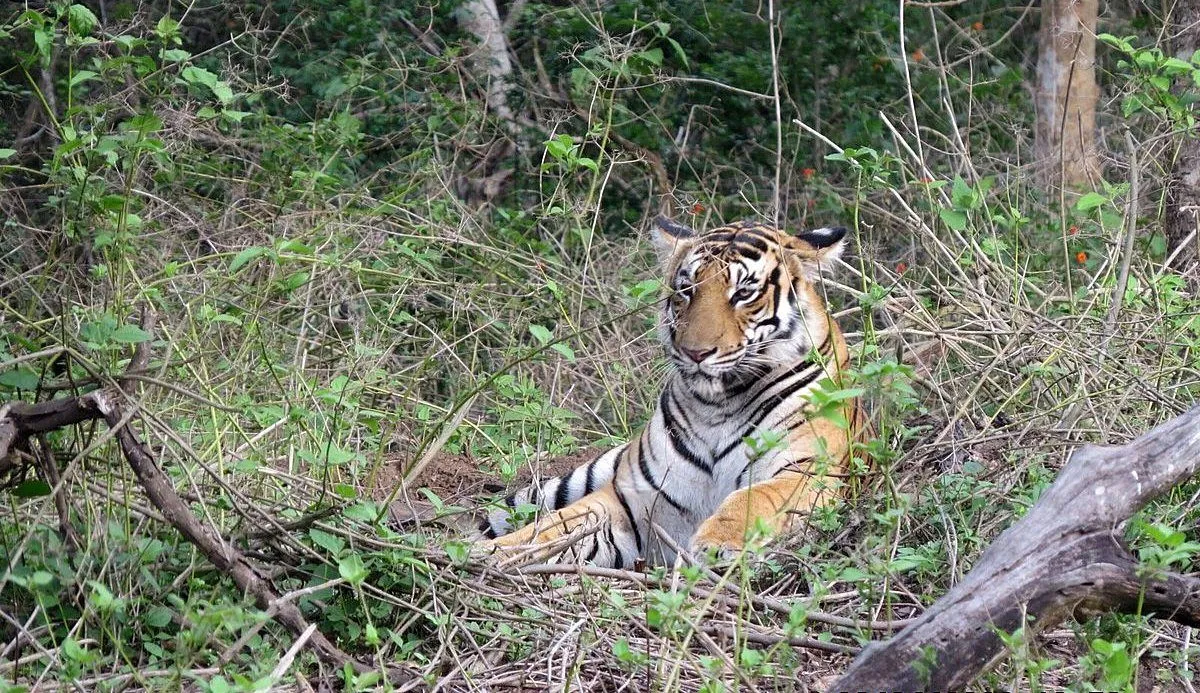
Beyond elephants, Nagarhole holds tigers, leopards, gaur (Indian bison), dholes (wild dogs), sloth bears, sambar, chital, wild boar and mugger crocodiles. The park supports a strong tiger population, with recent counts well over a hundred, but tigers are shy in the dense forest, so a sighting is a bonus. A rare black leopard is sometimes reported here and is famous among photographers, though sightings are extremely uncommon. Birdlife is rich, with more than 250 species recorded, including eagles, hornbills, kingfishers and waterbirds. Next door, Bandipur adds more elephants and a very different dry-forest landscape.
Suggested 3-Day Safari Plan for Nagarhole
Day 1: Arrival and Boat Safari
- By midday: Drive from Mysore or Bengaluru, and check in at your lodge
- Afternoon: Safari briefing by the naturalists and a rest
- Late afternoon: First boat safari on the Kabini backwaters
- Evening: Dinner at the lodge
Day 2: Jeep and Boat Safaris
- Early morning: Jeep or canter safari through the forest tracks
- 10:30 AM: Breakfast and rest at the lodge
- Afternoon: Second safari, by jeep or boat
- Evening: Free time on the shore, and dinner
Day 3: Final Safari and Departure
- Early morning: Third safari, ideally in the zone with the best recent sightings
- Late morning: Breakfast, check out, and continue to Coorg, Mysore or Bandipur
Only two days? Take a boat safari on arrival, two safaris on Day 2 and a final one on the morning you leave. A fourth day? Add an extra safari or continue to Bandipur.
How to Reach Nagarhole
- By road: Mysore is roughly 80 to 95 km from Kabini, about 2 to 2.5 hours, and Bengaluru roughly 220 km, around 4.5 to 5.5 hours. A private chauffeur is the easiest way to link Nagarhole with Bandipur, Coorg and the rest of South India.
- By rail: Mysore is the nearest main railhead, with connections from Bengaluru and other cities. Check current schedules, then continue by road.
- By air: Bengaluru is the main gateway, with Mysore as a smaller option. Check current schedules before booking, then continue by road.
Where to Stay in Nagarhole
- Kabini lodges and resorts: The most popular choice, from a state-run lodge to private luxury resorts along the backwaters, often with safaris, meals and naturalists arranged on site.
- Hunsur and Kodagu-side stays: Quieter lodges and homestays near the other park entrances, a good fit if you prefer fewer visitors.
- Mysore: Many more hotels, a couple of hours away, for travellers who want a city base.
Best Time to Visit Nagarhole
October to May is the best time to visit. From February to May the dry season exposes the shore at Kabini, and elephants and other animals gather there, which makes it the best period for sightings, though it is hot. October to January follows the monsoon, with lush greenery, pleasant weather and softer light for photography. The monsoon, from June to September, brings heavy rain and thick vegetation, which makes wildlife harder to see, and safari operations can be reduced.
Travel Tips for Nagarhole
- Book safaris and boat seats early for weekends, holidays and February to May.
- Carry photo ID for every guest, and check camera fees.
- Take at least three or four safaris, mixing jeep and boat, for the best experience.
- Wear muted colours, carry water and sun protection, and bring binoculars.
- Pack a light jacket for cool mornings and a rain jacket for the monsoon.
- Keep a safe distance from elephants, and stay seated on land and on the water.
- Check monsoon operations and entry points before you plan.
- Do not count on a tiger sighting, and enjoy the elephants, gaur and birds.
Nearby Places to Combine with Nagarhole
Nagarhole fits easily into a South India route. Bandipur is the natural wildlife pairing, and Mysore adds its palace and markets. Heading into the hills, you can continue to Coorg or Chikmagalur for coffee country. For ready-made routes, see our South India tour packages or wildlife tours.
Plan Your Nagarhole Safari with Us
Tell us your dates and group size, and we will shape a suggested plan around your interests. It can include a Kabini lodge, help booking jeep and boat safaris subject to availability, a private air-conditioned car with driver, and routes that link Nagarhole with Bandipur, Mysore and Coorg.
Plan Your Nagarhole Safari →Why Plan Nagarhole with Us
- Itineraries are suggested routes that we tailor to your dates, interests and pace.
- Safaris are planned around slots, bookings and the dry-season elephant gatherings.
- Lodges and drivers who know Kabini and the roads around it.
- Nagarhole combines easily with Bandipur, Mysore, Coorg and the wider South India circuit.
Frequently Asked Questions
How many safaris do you need in Nagarhole?
At least three or four safaris over two or three days, mixing jeep and boat, for a complete experience.
Is Nagarhole good for elephant sightings?
Yes. Kabini is one of the best places in India to see large elephant herds, especially from February to May, though sightings vary from day to day.
What makes Nagarhole unique?
The combination of jeep and boat safaris along the Kabini backwaters gives a distinctive way to watch wildlife, with elephants on the shore and tigers in the forest.
Are tiger sightings guaranteed?
No. Nagarhole has a strong tiger population, but tigers are shy in the dense forest, so sightings are never guaranteed.
Is Nagarhole suitable for luxury travellers?
Yes. Kabini has a range of premium lodges with safaris, meals and naturalists arranged on site, alongside simpler stays.
Can I combine Nagarhole with Bandipur?
Yes. The two parks adjoin each other across the Kabini backwaters and combine well in one trip, with Bandipur adding a drier forest landscape.