

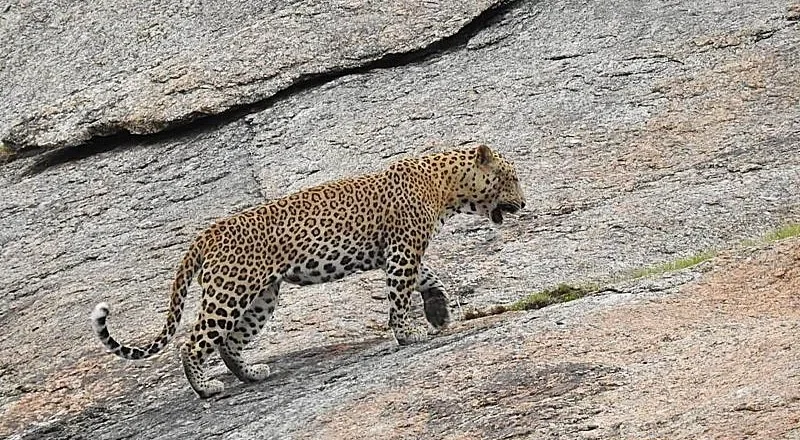
Jawai Leopard Safari
Granite Hills, Camps and Wildlife
A Travel Guide to Rajasthan’s Leopard Country
Jawai is a stretch of rocky granite hills, farmland and reservoir in southern Rajasthan, and one of the best places in India to see leopards in daylight. The leopards live among the boulders and caves of the hills, close to the villages of the Rabari herding community, and guided jeep safaris go out in the early morning and late afternoon. Around Jawai Bandh, the large reservoir below the hills, you can also look for birds, walk through villages and visit small cave temples. Guests stay in tented camps and boutique lodges, usually for two nights or more so that they have more than one chance to see leopards. Jawai lies between Jodhpur and Udaipur, so it combines well with the heritage stops on a Rajasthan tour. This guide covers what to see, a 2-day plan, how to reach Jawai, when to go and how to get the most from a leopard safari.
Plan Your Jawai Leopard Safari →
Jawai at a Glance
- Location: Southern Rajasthan, around the Jawai Bandh reservoir near Sumerpur
- Position: Between Jodhpur and Udaipur, close to Ranakpur and Mount Abu
- Ideal stay: 2–3 nights
- Best known for: Leopard safaris among granite hills
- Things to do: Jeep safari, birdwatching, village visits, cave temples, reservoir views
- Where to stay: Tented camps and boutique lodges in the hills
- Perfect for: Wildlife lovers, photographers, couples and families with older children
- Best season: October to March
Top Things to See and Do in Jawai
Jawai is about wildlife and landscape rather than monuments. These are the main experiences, with the leopard safari first.
Jawai Leopard Safari
Safaris go out in open jeeps with a trained guide and tracker, usually in the early morning and again in the late afternoon, when leopards are most active. You drive through boulder-strewn hills, scrub and grassland, scanning ridges, rock slabs and cave mouths for a resting or moving leopard. Leopards are wild animals, so sightings can never be guaranteed, but several safaris over two or three nights give you a good chance.
Granite Hills and Caves
The hills are a landscape of huge granite domes, balanced boulders and natural caves, which the leopards use for shelter and for raising cubs. Even on a drive with no leopard, the scenery at sunrise and sunset is a reason to go, and it is a favourite subject for photographers.
Rabari Villages
The Rabari are a traditional herding community whose flocks graze in the hills, and they have lived alongside leopards for generations. A village visit, arranged through your camp, shows how people and wildlife share the land. Please ask before photographing people.
Jawai Bandh Reservoir and Birdlife
Jawai Bandh is a large reservoir below the hills. It draws water birds, including migratory species in winter, and marsh crocodiles can sometimes be seen. Early morning and late afternoon are the best times, and binoculars help.
Cave Temples and Sunsets
Small cave temples and shrines sit among the rocks in the hills and near the lake. Many guests end the day on a ridge or by the water for sunset, with tea before returning to camp for dinner.
Suggested 2-Day Plan
The timings below are standard timings, shown only to give an idea of how a stay can flow. Safari times are set by sunrise, sunset and the season. We suggest at least two nights, so this plan shows two full days and a morning departure.
Day 1: Arrival and Afternoon Safari
- Approx. 1:00 PM: Arrive at your camp, check in and have lunch.
- Approx. 4:00 PM: Afternoon leopard safari through the granite hills (about 3 hours).
- Approx. 7:30 PM: Dinner at the camp under the stars.
Day 2: Morning Safari, Villages and Reservoir
- Approx. 6:30 AM: Early morning safari, the best time for active leopards (about 3 hours).
- Approx. 10:00 AM: Breakfast and rest at the camp.
- Approx. 3:00 PM: Village visit, cave temple or birdwatching at Jawai Bandh.
- Approx. 4:30 PM: Second afternoon safari, or a quiet sunset by the water.
Day 3: Departure
- Approx. 6:30 AM (optional): One more morning safari for a last chance at leopards.
- Approx. 11:00 AM: Check out and continue to Ranakpur, Udaipur, Jodhpur or Mount Abu.
How to Reach Jawai
- From Udaipur: About 130 to 140 km, roughly 3 to 4 hours by road. Udaipur has the nearest major airport and is the most common starting point.
- From Jodhpur: About 150 km by one common route, roughly 3 to 4 hours by road. Jodhpur also has an airport.
- From Mount Abu: About 87 km, roughly 2 to 2.5 hours.
- By train: Jawai Bandh railway station is about 15 km from the hills and Falna about 35 km. Your camp can arrange a pickup.
- On a longer journey: Jawai sits well between Udaipur and Jodhpur. A private chauffeur makes it easy to add Ranakpur or Kumbhalgarh on the way.
Where to Stay in Jawai
Most guests stay in tented camps and boutique lodges set in or beside the hills, where the safari starts at your door and the evening is quiet. Properties are small and the best ones fill early between October and March, so book well ahead and confirm which safaris are included in your stay.
Best Time to Visit Jawai
October to March is the most comfortable time for safaris. Use the guide below to choose your dates.
- October to November: Warm days and pleasant mornings, with migratory birds arriving at the reservoir.
- December to February: Cool days and cold early mornings. Bring warm layers for open-jeep safaris.
- March: Warming up. Safaris are best at the start and end of the day.
- April to June: Hot, but leopards tend to rest in the shade and move near water at dawn and dusk, which many guests find a rewarding time for sightings.
- July to September: Monsoon turns the hills green, and safari plans depend on the weather and conditions.
Leopard Safari Tips
- Stay at least two nights: More safaris mean a better chance of a sighting, because leopards are wild and unpredictable.
- Go out at both ends of the day: Early morning and late afternoon are when leopards move and when the light is best.
- Follow your guide: Stay seated in the jeep, keep voices low and never leave the vehicle unless your guide says it is safe.
- Dress for the cold: Open jeeps are cold in winter mornings, so bring layers, a scarf and gloves.
- Wear neutral colours: Khaki, olive and brown are best, and avoid bright colours and strong perfume.
- Bring the right kit: Binoculars and a camera with a zoom lens, plus spare batteries.
- Respect the animals and people: Never feed or crowd wildlife, and ask before photographing villagers.
Travel Tips for Jawai
- Pack warm layers for winter mornings and evenings.
- Carry a hat, sunglasses, sunscreen and water.
- Wear sturdy shoes for walks among the rocks.
- Book camps and safaris early for October to March.
- Keep valuables and electronics dust-free on jeep rides.
- Expect limited mobile signal in the hills.
- Check the age rules for safaris if you travel with young children.
- Allow time at camp, since the quiet evenings are part of the experience.
Jawai or Nimaj for Leopards?
For leopards, Jawai is the stronger choice, because the hills here are known for regular daylight sightings. Nimaj is a quieter lakeside stay, better for birdwatching, village walks and a slow pace, and the two can be combined on one journey between Jodhpur and Udaipur.
Nearby Places to Combine with Jawai
- Ranakpur: The famous Jain temples. Non-Jain visitors are usually admitted in the afternoon, so check the current visiting hours.
- Kumbhalgarh: The great hill fort with its long wall.
- Mount Abu: Rajasthan’s only hill station, with Dilwara temples and lake views.
- Narlai and Nimaj: Quiet village and lakeside stays on the same route.
- Udaipur and Jodhpur: The two cities that bookend the route.
Plan Your Jawai Stay with Us
We can arrange your camp stay, a private transfer from Udaipur or Jodhpur and guided leopard safaris, with a village visit and birdwatching if you like, all customised to your dates and pace. Tell us when you are travelling and for how many nights, and we will send a suggested plan within 24 hours.
Plan My Jawai Stay →Why Plan with Us
- Based in Rajasthan: A local team that knows the camps and back roads between Jodhpur and Udaipur.
- Realistic about wildlife: We plan enough nights for a fair chance of leopards and never promise a sighting.
- Easy to combine: We link Jawai with Ranakpur, Kumbhalgarh, Nimaj, Udaipur and Jodhpur in one smooth journey.
- Personal support: One contact before and during your trip, with 24/7 assistance on the road.
Frequently Asked Questions
Is Jawai good for a leopard safari?
Yes. The granite hills around Jawai are known as one of the best places in India to see leopards in daylight.
Is a leopard sighting guaranteed?
No. Leopards are wild animals, so sightings can never be guaranteed. Staying two or three nights and going out on every safari gives you a better chance.
How many nights should I spend in Jawai?
We suggest two to three nights. That allows several morning and afternoon safaris, plus time for villages, birdwatching and rest.
What is the best time to visit Jawai?
October to March has the most comfortable weather. Summer is hot, but many guests find it rewarding for sightings, and the monsoon turns the hills green.
How far is Jawai from Udaipur and Jodhpur?
Roughly 130 to 140 km from Udaipur and around 150 km from Jodhpur by a common route. Allow about 3 to 4 hours from either city.
Is Jawai suitable for families?
Yes, especially with older children who can sit quietly on a safari. Check the age rules with your camp if you travel with young children.
Should I choose Jawai or Nimaj?
Choose Jawai for leopards. Choose Nimaj for a quiet lakeside stay with birdlife and village walks. Many travellers combine both.
Which places can I combine with Jawai?
Jawai pairs well with Ranakpur, Kumbhalgarh, Mount Abu, Udaipur and Jodhpur.
Explore More Places in Rajasthan
Continue your journey through Rajasthan with more place guides. Link Jawai with the quiet lakeside stay at Nimaj, the temples of Ranakpur or the lake city of Udaipur, or explore other heritage stays across the state.