

Sarnath Excursion from Varanasi
Buddhist Heritage and Deer Park
Where the Buddha Gave His First Sermon
Sarnath lies just outside Varanasi and feels like a different world: calm, green and quietly spiritual after the crowds and noise of the ghats. It is where the Buddha delivered his first sermon after attaining enlightenment, which makes it one of the most important Buddhist pilgrimage sites in the world. The site holds the great Dhamek Stupa, the ruins of ancient monasteries, the broken Ashoka Pillar, a fine archaeological museum that houses the Lion Capital of Ashoka (India’s national emblem) and temples built by Buddhist communities from several countries. It is an easy half-day excursion from Varanasi, with a drive of about 30 minutes each way. This guide covers what to see, a suggested half-day plan, how to reach Sarnath, what to expect and when to go.
Plan Your Sarnath Excursion →
Sarnath at a Glance
- Location: Just outside Varanasi, Uttar Pradesh
- Distance: About 10 km from Varanasi, roughly 30 minutes by road
- Time needed: 4–5 hours including the drive
- Best known for: The Buddha’s first sermon and the Dhamek Stupa
- Main sights: Dhamek Stupa, ruins, Mulagandha Kuti Vihar, Ashoka Pillar, museum, Deer Park
- Dress: Modest, with shoulders and knees covered, and easy shoes for temples
- Perfect for: Spiritual seekers, history lovers and Buddhist heritage travellers
- Best season: October to March
What to See in Sarnath
Sarnath is spread across a calm, park-like area, and most of its sights are within an easy walk or short ride of each other.
Dhamek Stupa
This tall cylindrical stupa marks the spot traditionally linked with the Buddha’s first sermon. Its lower walls carry carved patterns, and it stands among lawns and old brick ruins. It is the landmark of Sarnath, and the best place to start.
Sarnath Ruins
Around the stupa lie the foundations of ancient monasteries, shrines and smaller stupas, which show how large and active Sarnath once was as a centre of Buddhist learning. Walking among the brick remains is quiet and atmospheric.
Mulagandha Kuti Vihar
This peaceful modern temple is known for its beautiful Buddhist murals and a calm prayer hall. Remove your shoes at the entrance and keep your voice low, as monks and pilgrims often pray here.
Ashoka Pillar Site
The remains of a pillar erected by Emperor Ashoka stand near the main ruins. The famous lion capital that once topped it is now in the museum, so seeing both gives a fuller picture.
Sarnath Archaeological Museum
The museum houses the Lion Capital of Ashoka, India’s national emblem, together with Buddhist sculptures and relics found at Sarnath. It is small and easy to see in under an hour, and a guide helps explain the pieces.
Monastery Complex and International Temples
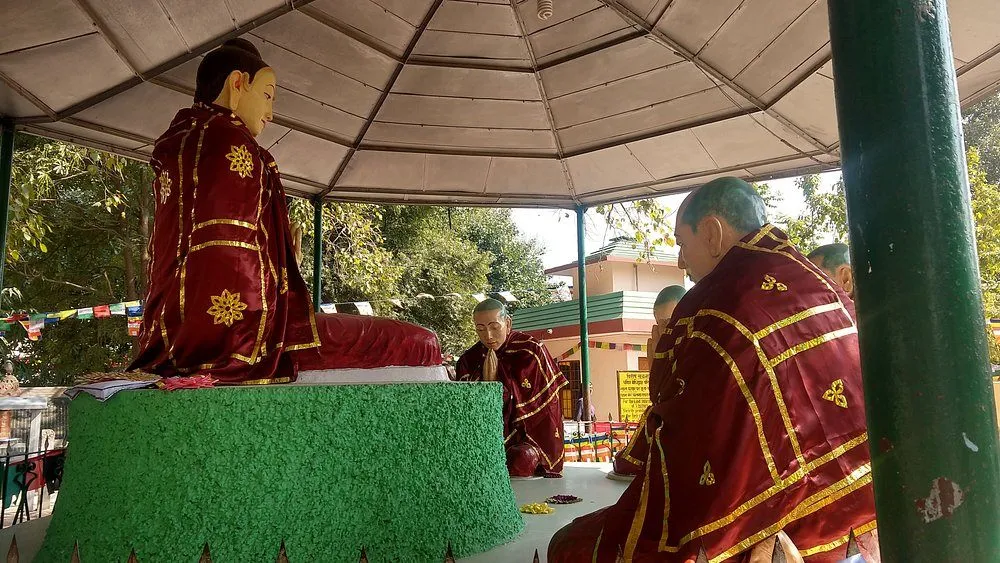
Buddhist communities from several countries have built temples and monasteries around Sarnath, each in its own architectural style. They are good for quiet time and for seeing how living Buddhist practice sits alongside the ancient ruins.
Deer Park (Mrigadava)
The Deer Park is the green, shaded setting where the Buddha first taught, and it makes a gentle end to the visit. A slow walk here lets the day settle before you return to the city.
Suggested Half-Day Excursion
The timings below are standard timings, shown only to give an idea of how the excursion flows. Early morning is quiet and cool, and opening days and hours can change the order.
- Approx. 8:30 AM: Leave your Varanasi hotel and drive to Sarnath (about 30 minutes).
- Approx. 9:00 AM: Dhamek Stupa and the surrounding ruins (about 75 minutes).
- Approx. 10:15 AM: Mulagandha Kuti Vihar temple (about 30 minutes).
- Approx. 10:45 AM: Ashoka Pillar site and the monastery complex (about 45 minutes).
- Approx. 11:30 AM: Archaeological Museum (about 45 minutes), if it is open that day.
- Approx. 12:15 PM: Gentle walk through Deer Park, then lunch if you wish.
- Approx. 1:00 PM: Return to your Varanasi hotel.
How to Reach Sarnath
- By road from Varanasi: About 10 km, roughly 30 minutes, though Varanasi traffic can make it longer. A private chauffeur is the easiest way, because you can set your own start time and see the sites at your own pace.
- On a longer journey: Sarnath fits as a half-day on a stay in Varanasi, and Varanasi itself links with Delhi, Agra and Jaipur.
What to Expect and How to Behave
- A quiet place: Sarnath is calm and reflective, so speak softly, especially at the stupa and in the temples.
- Dress modestly: Cover your shoulders and knees, and wear shoes that are easy to take off.
- Temple etiquette: Remove shoes before entering temples, and do not point your feet at statues or touch sacred objects.
- Tickets: The main ruins and the museum usually have separate entry fees, which are paid at the gate. Check the current rates and times before you go.
- Museum days: The museum has a weekly closing day, so confirm it before planning, and check photography rules inside.
- Walking: The site is flat and easy, but you will walk on paths and uneven ground between the sights.
Best Time to Visit Sarnath
October to March is the best time, with pleasant weather for sightseeing. Early mornings are especially peaceful, away from the crowds and ideal for a reflective visit.
- October to March: Cool, comfortable weather. Winter mornings can be misty and cold, so carry a light layer.
- April to June: Very hot. Start as early as possible and rest in the afternoon.
- July to September: Monsoon, with rain and humidity but green gardens and fewer visitors.
Travel Tips for Sarnath
- Go early, when it is cooler and quieter.
- Wear comfortable shoes that are easy to remove.
- Carry a hat, sunscreen and water in warm months.
- Take a guide if you want the history explained.
- Carry small change for entry fees and offerings.
- Keep voices low and avoid loud calls or music.
- Ask before photographing monks and worshippers.
- Allow time to sit quietly rather than rushing between sights.
Combine with Varanasi and Beyond
Plan Your Sarnath Excursion with Us
We can arrange a private transfer from your Varanasi hotel to Sarnath, with a guide if you would like one, and fit the visit around your Varanasi sightseeing and boat ride, all customised to your dates and pace. Tell us when you are travelling and your group size, and we will send a suggested plan within 24 hours.
Plan My Sarnath Excursion →Why Plan with Us
- Local planning: We plan around opening days, traffic and the quietest hours at each site.
- Tailored to you: Transfers, guide and timing are matched to your dates, pace and interests.
- Easy to combine: We fit Sarnath around Varanasi and link it with Delhi, Agra and Jaipur in one smooth journey.
- Personal support: One contact before and during your trip, with 24/7 assistance on the road.
Frequently Asked Questions
How far is Sarnath from Varanasi?
About 10 km, roughly 30 minutes by road, though traffic in Varanasi can make the drive longer.
Why is Sarnath important?
It is where the Buddha gave his first sermon after enlightenment, which makes it one of the four great Buddhist pilgrimage sites.
How long does a visit to Sarnath take?
About 4 to 5 hours including the drive from Varanasi, which covers the stupa, ruins, temple, museum and Deer Park at an easy pace.
Is Sarnath suitable for all travellers?
Yes, it is an easy and calm excursion for most ages. There is some walking on paths and uneven ground, so wear comfortable shoes.
Do I need a guide for Sarnath?
A guide is optional but recommended, because the ruins and museum make much more sense with the history explained.
What is the best time to visit Sarnath?
October to March, and early morning at any time of year for the quietest visit.
Can I combine Sarnath with Varanasi sightseeing?
Yes. Many travellers visit Sarnath in the morning and see the ghats and old city in the afternoon or evening. See our Varanasi guide for more.
Which places can I combine with Varanasi and Sarnath?
Varanasi links well with Delhi, Agra and Jaipur.
Explore More Places in India
Continue your journey through India with more place guides. Link Sarnath with the ghats of Varanasi, then travel on to Delhi, Agra and Jaipur, or explore our full range of sightseeing guides.