

Mount Abu Sightseeing Guide
Rajasthan’s Hill Station of Temples, Lakes and Viewpoints
Things to See, How to Reach and Where to Stay in Mount Abu
Mount Abu sits in the Aravalli hills near the Rajasthan and Gujarat border and is often described as Rajasthan’s only hill station. Cool air, forested hills, a calm lake and some of India’s finest carved temples make it a welcome change from the state’s desert cities. If Mount Abu is part of your Rajasthan itinerary, this guide gives you the practical details: what to see, how long to allow, how to reach it, where to stay and when to go. We also plan private transfers, hotels and guides as part of tailor-made journeys. Looking for a longer route? See our Rajasthan tour packages.
Add Mount Abu to Your Journey →
Mount Abu at a Glance
- Location: Aravalli hills, near the Rajasthan and Gujarat border
- From Udaipur: Roughly 165 km, about 3.5 to 4 hours by road
- From Abu Road station: About 27 km, around 45 minutes uphill
- Ideal stay: 1 to 2 nights
- Best known for: Dilwara Jain Temples, Nakki Lake and Guru Shikhar
- Things to do: Temple visit, lakeside walks, viewpoints, sunset and short nature walks
- Where to stay: Hotels near Nakki Lake and quieter hillside resorts
- Best for: Families, couples, spiritual travellers, nature lovers and photographers
- Best season: October to March
Top Things to See and Do in Mount Abu
Most sights are close together, so Mount Abu is easy to cover in a day. These are the places most travellers build their visit around.
Dilwara Jain Temples
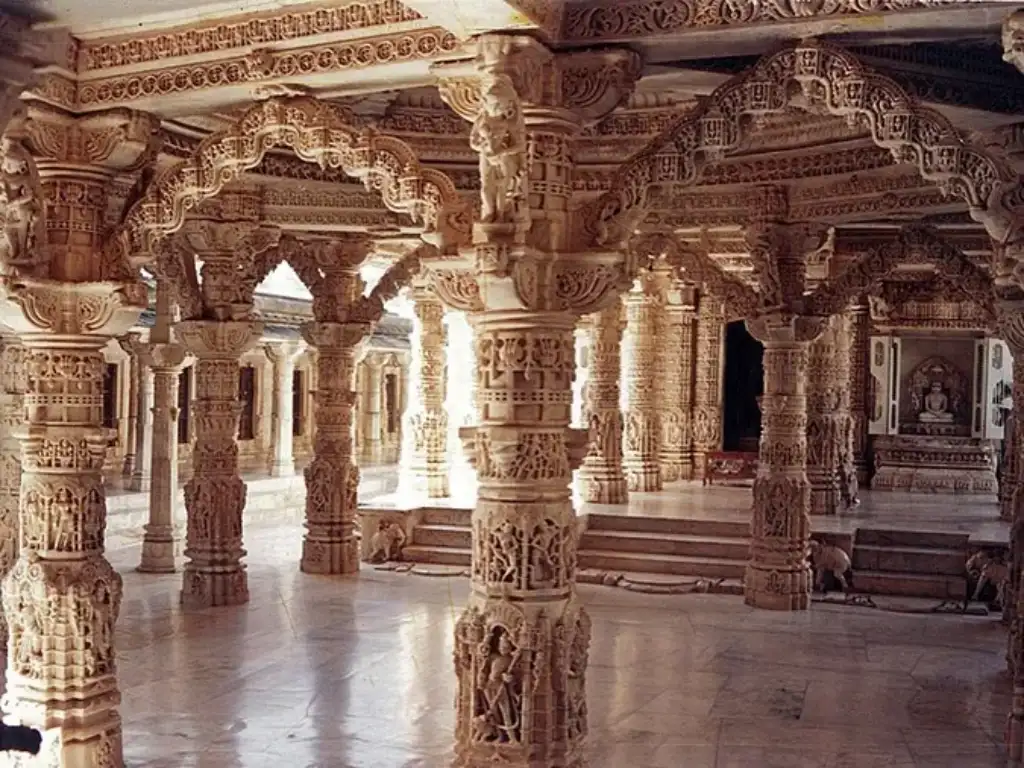
These marble temples are the reason many travellers come to Mount Abu, with pillars, ceilings and doorways carved in extraordinary detail. Visiting hours for non-Jain visitors are usually from around midday to late afternoon, so plan your day around them. Shoulders and knees should be covered, and leather items, phones and cameras are often not allowed inside. Photography is usually restricted, so take time to enjoy the carving in person. Allow about 75 minutes, and consider a guide.
Nakki Lake
The town’s centrepiece is a calm lake ringed by hills, with a lively promenade, small shops and optional boat rides. It is busy at weekends and during holidays, so a morning visit is calmer. Allow about an hour.
Toad Rock and Honeymoon Point
Both are short stops close to Nakki Lake. Toad Rock is a rock formation reached by a short walk, with a view over the water. Honeymoon Point is a viewpoint over the hills and the town, and a good spot for photographs.
Guru Shikhar
At the highest point of the Aravalli range, Guru Shikhar rewards the winding drive with wide views over the hills. A short flight of steps leads to the summit, which can be breezy and cool, so carry a light layer. Allow about 90 minutes including the drive.
Sunset Point
A popular spot for evening views, where the light turns the hills gold. It gets crowded, so arrive about 45 minutes before sunset to find a good place.
More Sights: Achalgarh, Adhar Devi and Gaumukh
If you have extra time, Achalgarh has an old fort and temple complex outside town, Adhar Devi is a hillside temple reached by a long flight of steps, and Gaumukh is a quiet temple with a spring, also reached by steps. Each takes 1 to 1.5 hours, and the steps are worth knowing about if anyone in your group finds stairs difficult.
Suggested 1-Day Plan for Mount Abu
The timings below are standard timings, shown only to give an idea of how a day can run. You can start when it suits you, and the order may change with temple hours, traffic and the light.
Morning: Nakki Lake and Viewpoints
Approx. 10:30 AM. Start at Nakki Lake while it is quiet, walk the promenade, then visit Toad Rock and Honeymoon Point.
Midday: Dilwara Jain Temples
Approx. 12:15 PM, about 75 minutes. Visit the temples when they open to visitors, then stop for lunch in town at around 1:45 PM.
Afternoon and Evening: Guru Shikhar and Sunset
Approx. 3:00 PM. Drive up to Guru Shikhar, then head to Sunset Point about 45 minutes before sunset. You are back at your hotel in the early evening. Staying a second night lets you add Achalgarh or Adhar Devi the next morning.
How to Reach Mount Abu
- By road from Udaipur: Roughly 165 km, about 3.5 to 4 hours. This is the most common route, and a private car lets you stop on the way.
- By rail: Abu Road is the nearest major railway station, about 27 km below the hill station. A road transfer takes around 45 minutes.
- By air: Udaipur and Ahmedabad have the nearest major airports, followed by a road transfer.
- From Ahmedabad: Roughly 220 km by road. Tell us your route and we will confirm the timing.
We arrange private chauffeur transfers from any of these points. See our private chauffeur service in India for longer journeys.
Where to Stay in Mount Abu
Mount Abu has many hotels, and the choice mainly comes down to location and noise.
- Near Nakki Lake: Convenient for walking to the lake, shops and restaurants, but busier and noisier at weekends and in holiday seasons.
- Quieter hillside hotels and resorts: Calmer settings with garden or hill views, usually a short drive from the centre.
We help you choose and book, and we match the stay to the rest of your route.
Best Time to Visit Mount Abu
October to March is the most comfortable time for sightseeing, though the hill station’s climate makes it a pleasant escape in other months too. Use the guide below to choose your dates.
- October to November: Clear, mild days after the monsoon. Festival weeks can be crowded.
- December to January: Cold mornings and evenings, sometimes close to freezing at night. Bring warm layers.
- February to March: Pleasant and bright, with clear views from Guru Shikhar.
- April to June: Warm days but cooler than the plains, which makes it popular with holidaymakers. Expect crowds at weekends and queues at viewpoints.
- July to September: Monsoon rain and mist turn the hills green, and views can be hidden by cloud. Roads and steps can be slippery.
Travel Tips for Mount Abu
- Plan Dilwara for midday or early afternoon, not early morning.
- Cover your shoulders and knees at the temples, and leave leather items, phones and cameras in the car.
- Avoid weekends and school holidays if you want a quieter visit.
- Carry a light jacket, as Guru Shikhar and evenings can be cool.
- Wear comfortable shoes for steps at the temples and viewpoints.
- Arrive early at Sunset Point to find a good place.
- Book hotels early for peak holiday seasons.
- Allow extra time for the winding road from Abu Road.
Nearby Places to Combine with Mount Abu
- Udaipur: Lakes, palaces and old-town lanes, see our Udaipur sightseeing tour.
- Ranakpur: A famous Jain temple in a quiet valley, see our Ranakpur tour.
- Kumbhalgarh: A UNESCO-listed hill fort and its great wall, see our Kumbhalgarh tour.
- Narlai: A heritage village stay, see our Narlai experience.
- Jodhpur: The blue city and its great fort, see our Jodhpur sightseeing tour.
Plan Your Mount Abu Visit with Us
We plan Mount Abu as part of tailor-made Rajasthan journeys, with private transfers, hotels and local guides arranged around your route, dates and pace. Tell us when you are travelling and how many of you there are, and we will send a clear plan within 24 hours.
Get a Plan for Your Dates →Why Plan Mount Abu with Us
- Tailor-made: Your visit is planned around your dates, interests and pace, not a fixed package.
- Planned around temple hours: We time the day so you reach Dilwara when it is open to visitors.
- Private transfers: Your own car and chauffeur, with no shared transport and no fixed departure time.
- Local knowledge: Planned by a Rajasthan-based team that knows the route, the crowds and the best order for each stop.
Frequently Asked Questions
What is Mount Abu famous for?
Mount Abu is famous for the Dilwara Jain Temples, Nakki Lake, Guru Shikhar and its cool hill-station climate, and it is often described as Rajasthan’s only hill station.
How many days do I need in Mount Abu?
One full day covers the main sights, and one night is the most common stay. Two nights add time for Achalgarh, Adhar Devi and a slower pace.
When can non-Jain visitors enter the Dilwara Temples?
Visiting hours for non-Jain visitors are usually from around midday to late afternoon, though they can change. We plan your day around the current hours.
Can I take photographs at the Dilwara Temples?
Photography is usually restricted inside, and cameras and phones may have to be left outside. Your driver or guide will tell you what applies on the day.
How do I reach Mount Abu?
By road from Udaipur in about 3.5 to 4 hours, or by train to Abu Road station and a road transfer of around 45 minutes. We can arrange a private transfer from either point.
What is the best time to visit Mount Abu?
October to March for comfortable sightseeing. Summer is popular but crowded, and the monsoon is green and misty.
Is Mount Abu suitable for families and older visitors?
Yes. The main sights involve short walks, with a few steps at Guru Shikhar and the temples. Tell us if anyone has difficulty walking and we will adjust the plan.
Can Mount Abu be added to a Rajasthan itinerary?
Yes. It fits easily between Udaipur, Ranakpur and Jodhpur. Send us your plans and we will tailor the route.
Explore More Places in Rajasthan
Mount Abu fits neatly into a longer journey through southern Rajasthan. Explore our other guides, from the lakes of Udaipur and the Jain temples of Ranakpur to the hill fort of Kumbhalgarh and the blue city of Jodhpur.